Skip to content

The BIG Guide to Monopoli

Take a Chance, Advance to Go

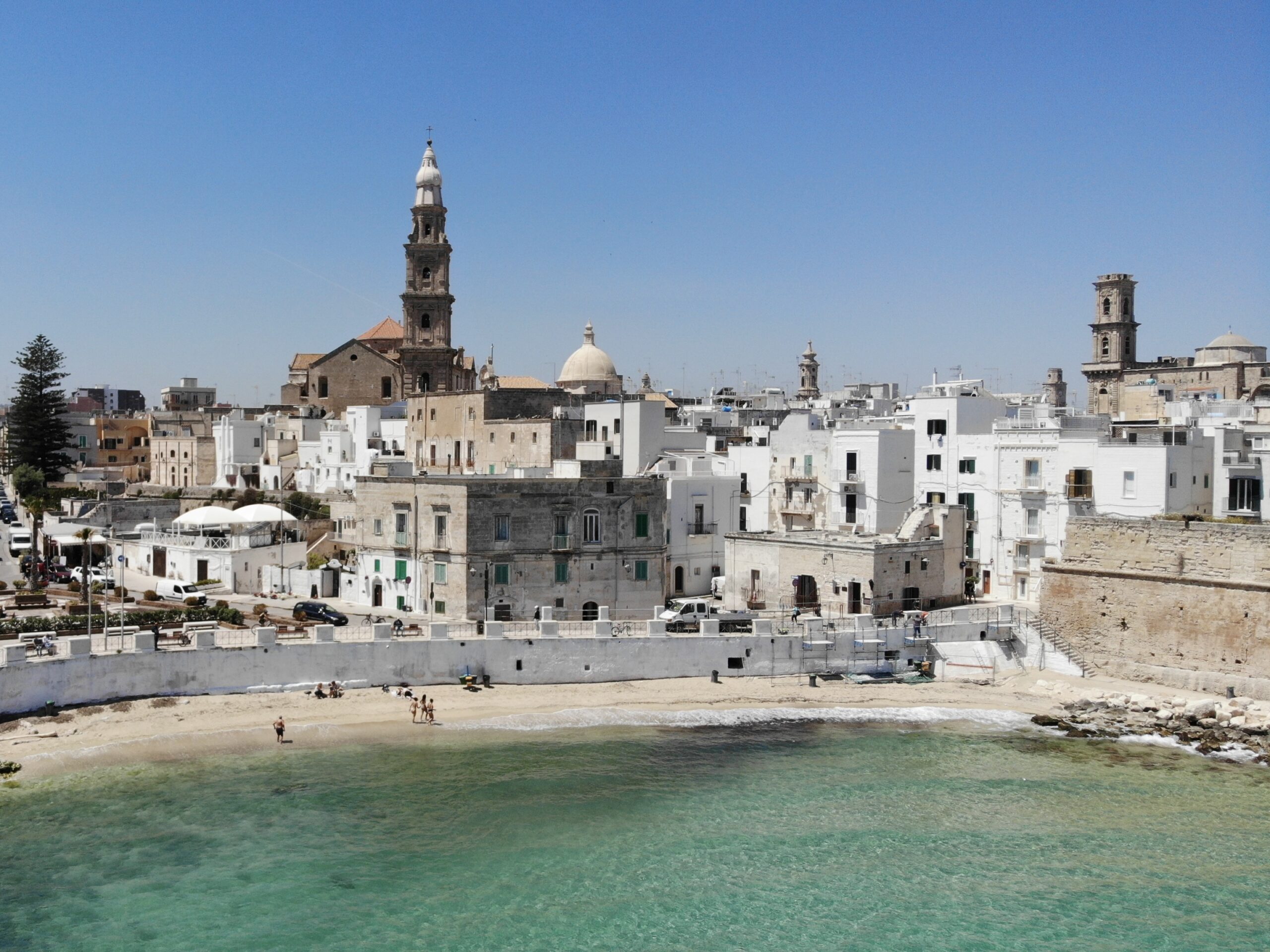
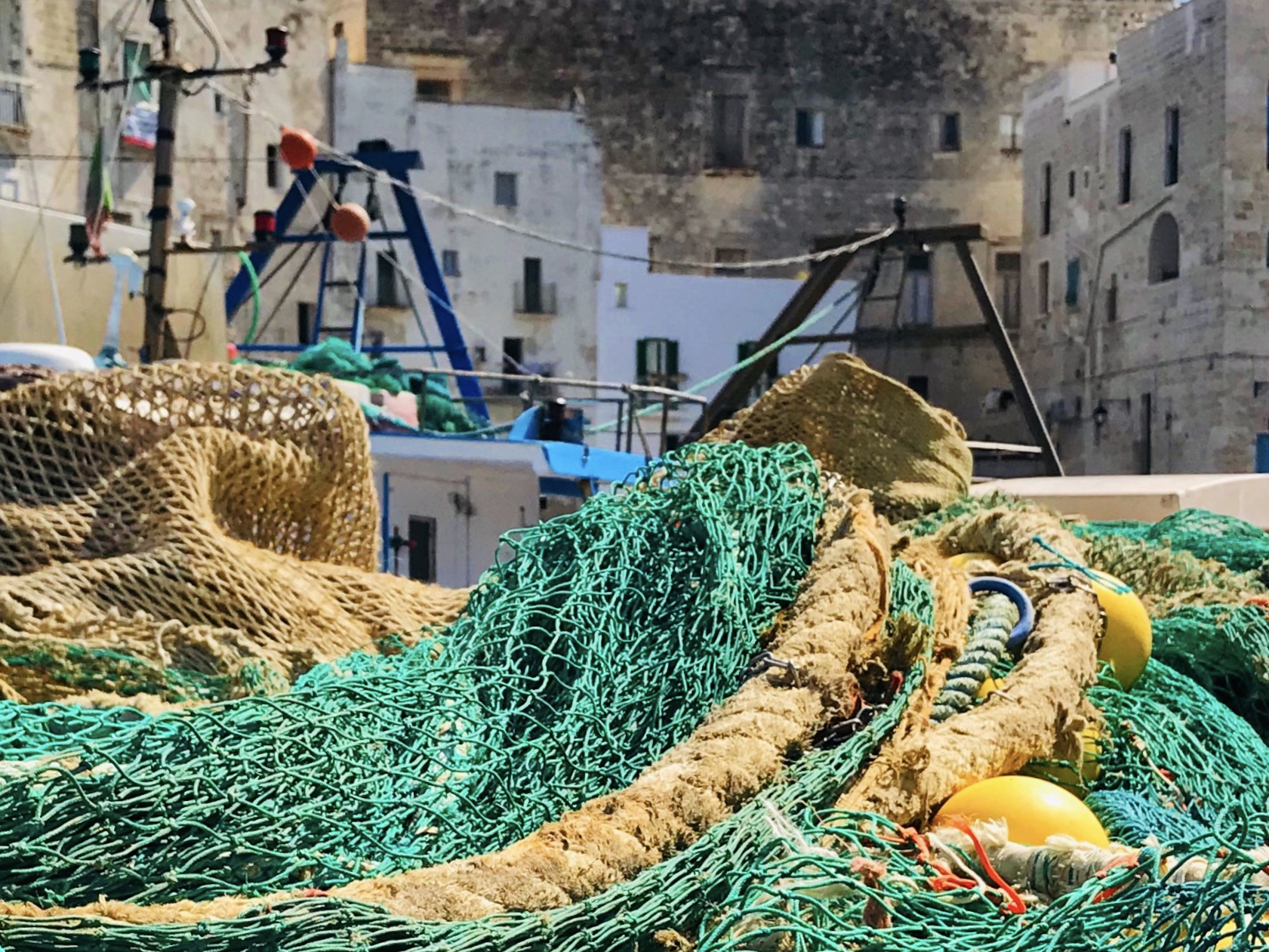
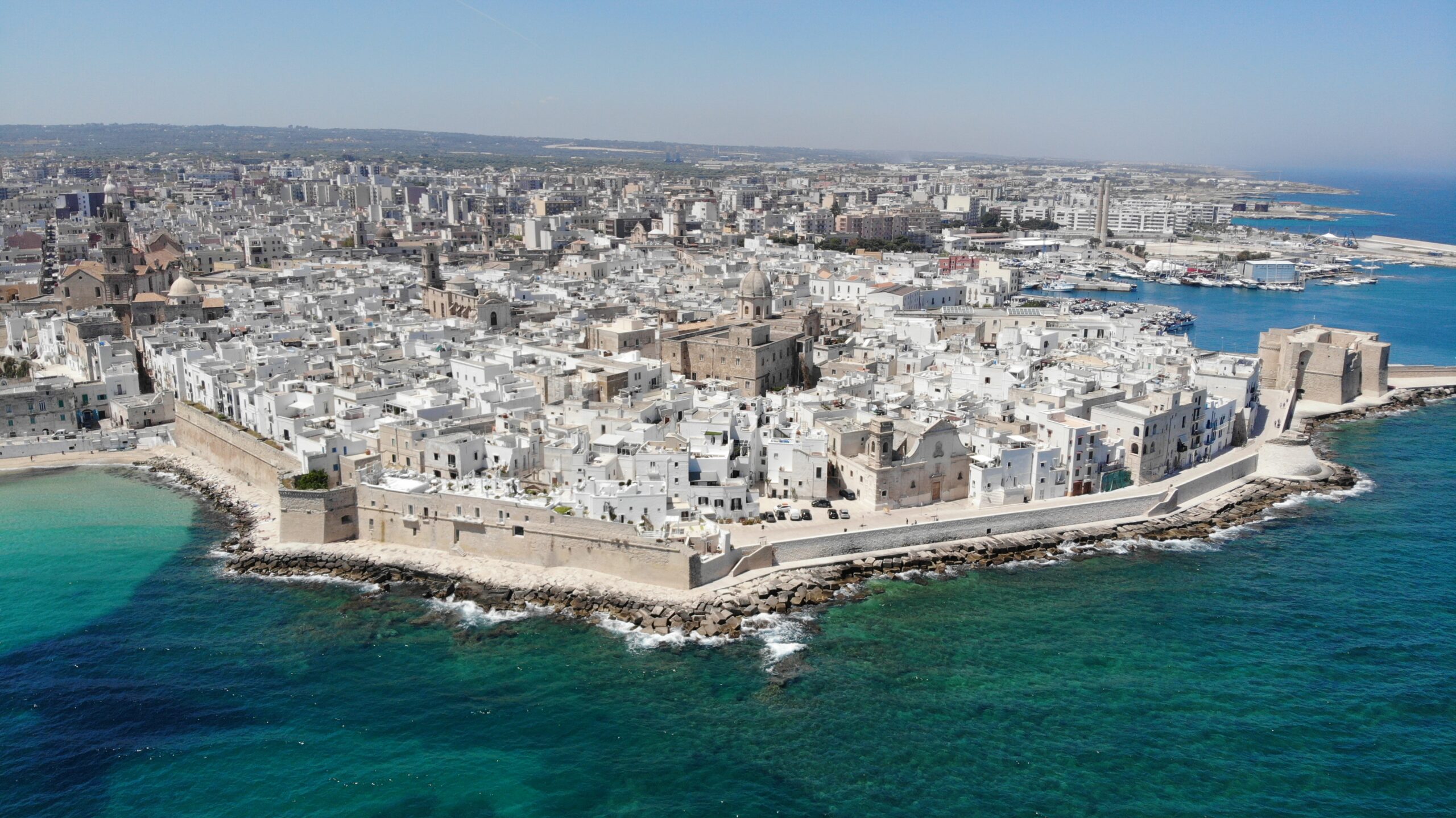
Monopoli’s picturesque old port is busy with fishermen unloading their day's catch and mending nets. The defensive sea-wall wrapped around the old town is perfect for a post-lunch or pre-dinner passeggiata.

Monopoli guide The Big Gay Podcast from Puglia

A seaport on the Adriatic with a population of around 50,000. Monopoli is well served by public transport and easily accessible by road: 13 miles|21 km from Alberobello, 26 miles|42 km from Ostuni, 28 miles|46 km from Bari and 68 miles|110 km from Lecce.

More | our guide to travelling around Puglia by public transport.
Monopoli guide The Big Gay Podcast from Puglia

The town didn’t give its name to the board game, but comes from the Greek meaning “unique city”. Today’s Monopoli retains an authentic charm that is the sum of its history and traditions.
Monopoli - from the Greek: monos ‘single’ + polis an urban centre, often fortified, built on a natural acropolis or harbour.
Monopoly - from monopōlion (monos + pōlein ‘sell’).
Monopoli guide The Big Gay Podcast from Puglia

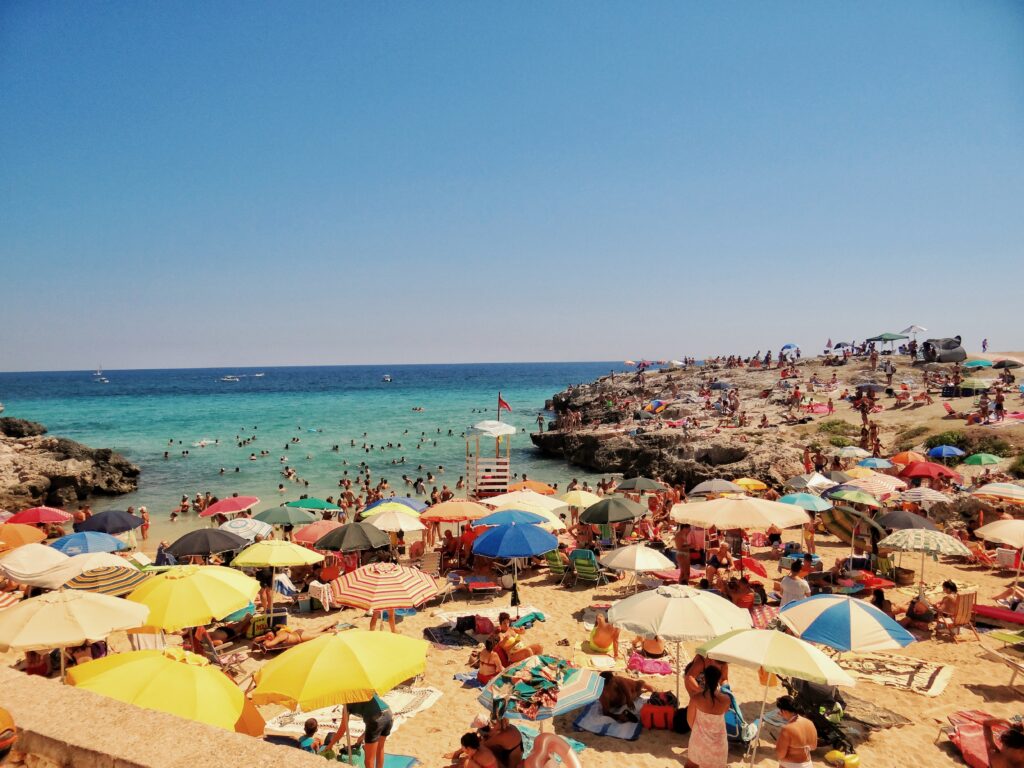
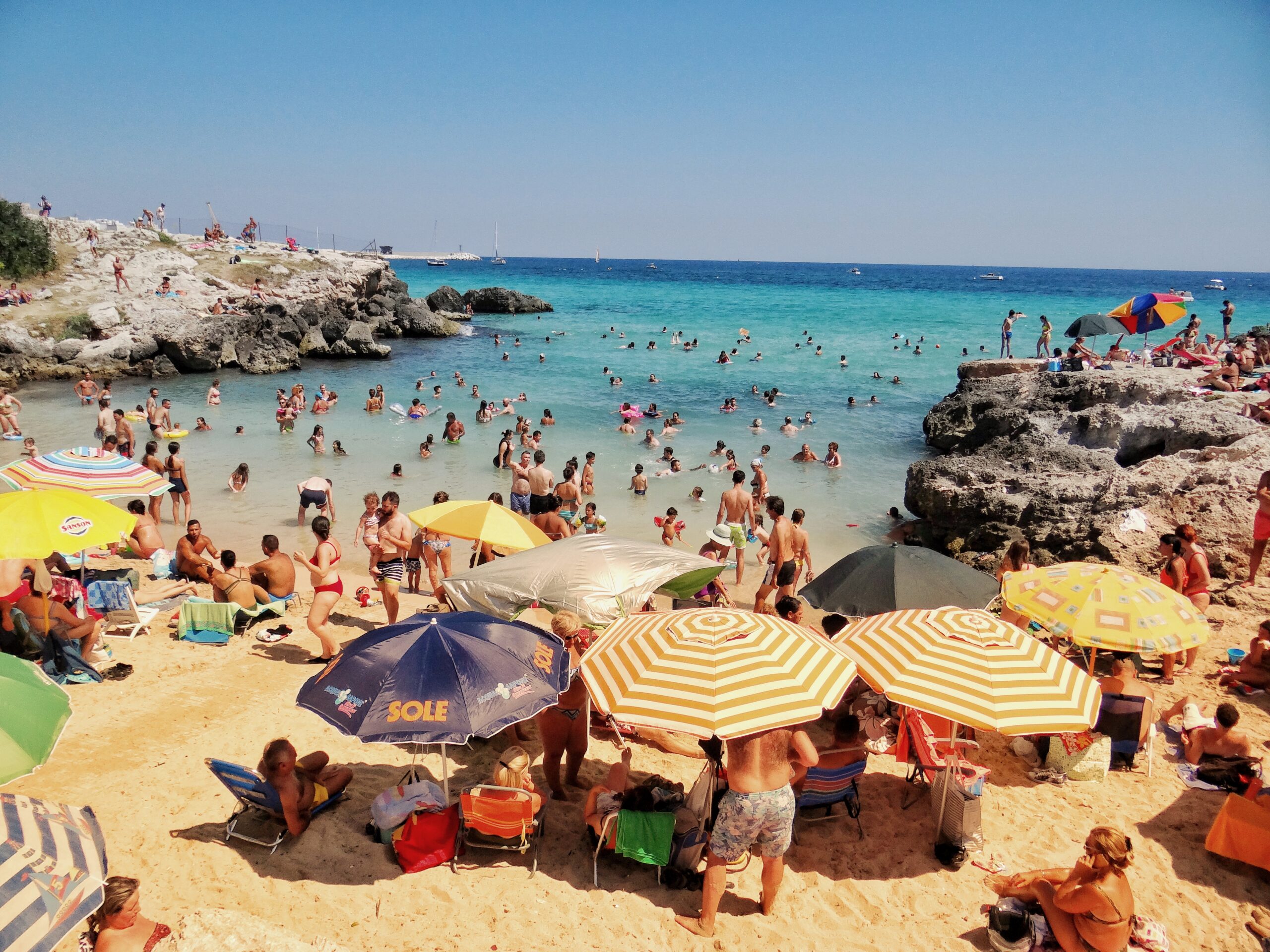
Often suggested as a destination for those who want to sit on the beach by day and enjoy a lively nightlife within walking distance, although sandy beaches are at a premium. Those with some sand tend to be on the small side - and fill up.

 The BIG Guide to Monopoli

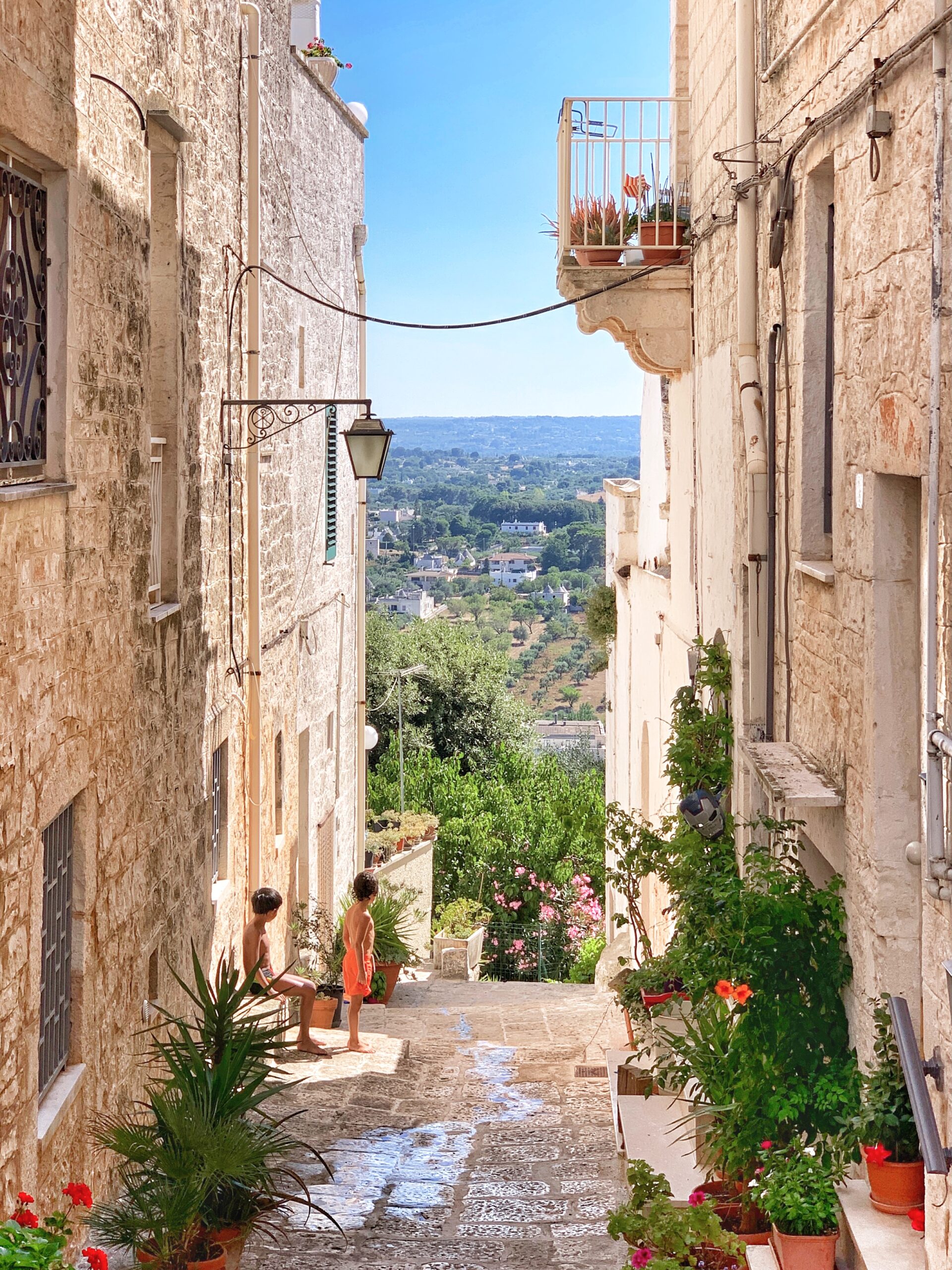
Adjacent to and sometimes overshadowed by its near neighbour Polignano a Mare, Monopoli offers a quieter alternative for lunch or dinner. It has a pretty old town and enjoys a less frenetic pace. The old port with its characteristic light blue and red blue fishing boats and green fishing nets drying under the sun invites you into the beating heart of its centro storico.

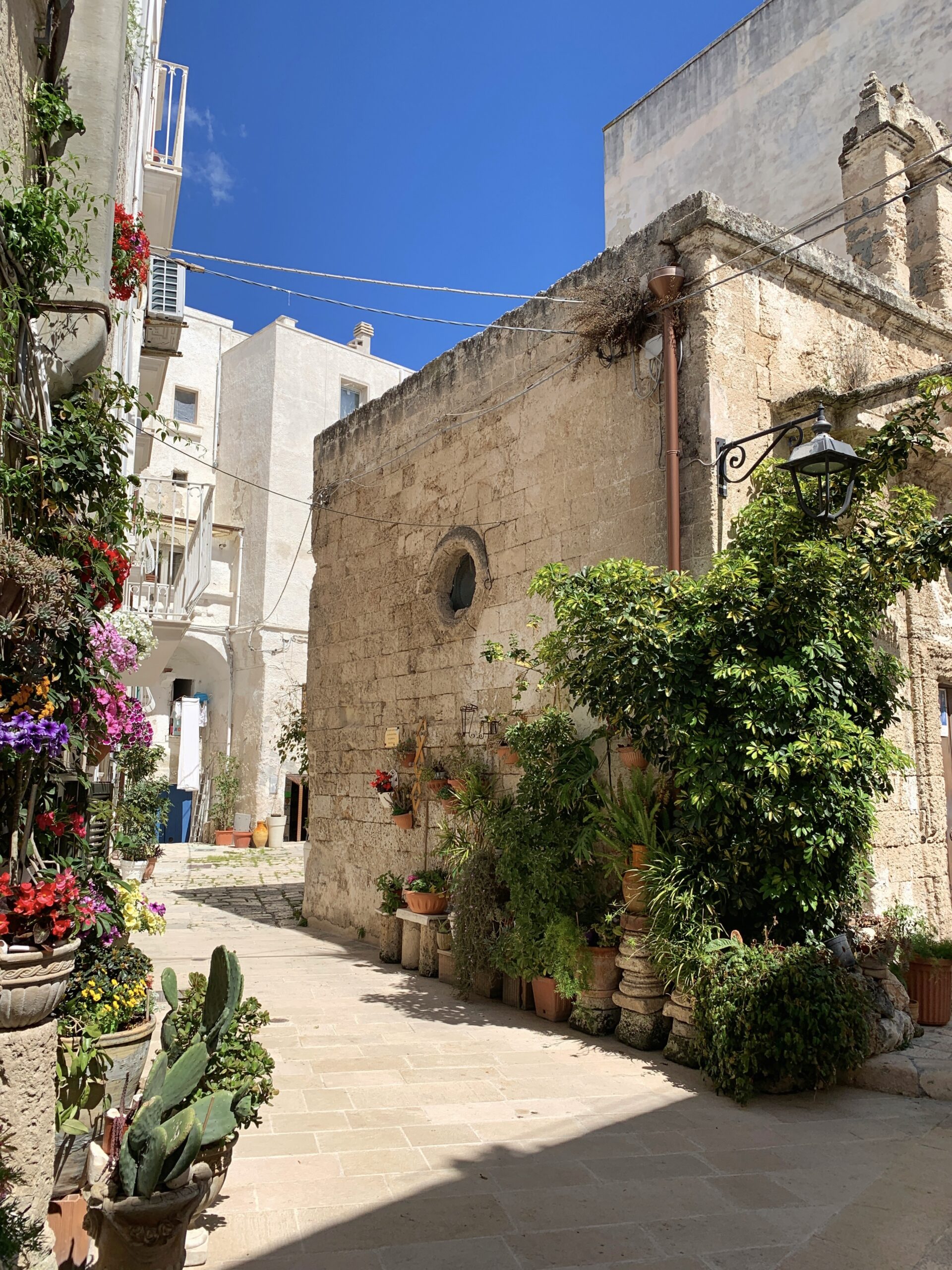
Its medieval center, characterised by churches and convents, is compact and charming.

Welcome to Monopoli

The city’s origins can be traced back to a Messapian fortress. Roman fortifications still remain as part of the gate to Castello di Carlo V, with its Roman tower. A defensive sea surrounds the old town from the Cala Porta Vecchia to Castello di Carlo V, a 16th century sea fort.

These betray the history of Monopoli as an important and strategic port, making it prone to attack and invasion. The Greeks, Romans, Byzantines, Venetians, French, Saracens and Turks, who have all left their footprint on the land, accounting for Monopoli’s rich heritage of customs and traditions. Today these survive in the old town’s architecture and the city’s religious processions and rites.

Monopoli is city born of the sea and one that lives from the sea. The homes in the old town - the centro storico - were originally built for and inhabited uniquely by its fishermen. The old port retains the Mediterranean atmosphere of a living, seafaring culture. “U vozz” the traditional local light blue and red fishing boats, made entirely from wood, shelter in the small bay of the old port. After the daily catch is landed, today’s fishermen, generations apart, can still be found mending their nets using the same methods as their ancestors.
Cactus in Puglia with fichi d’India fruit

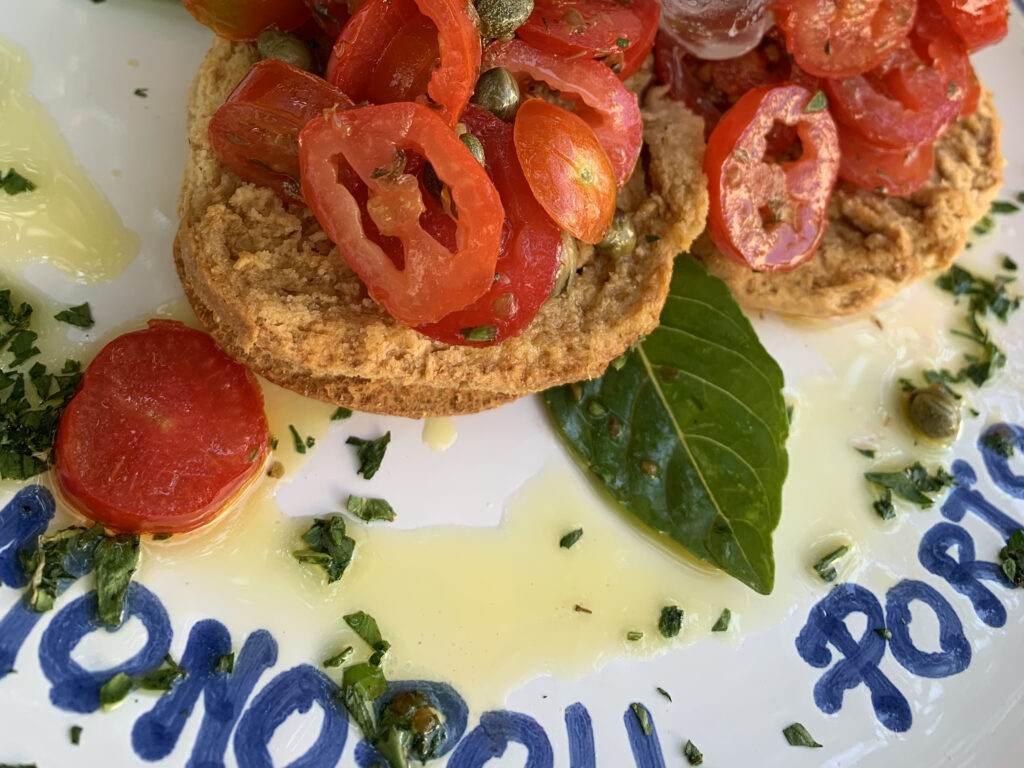
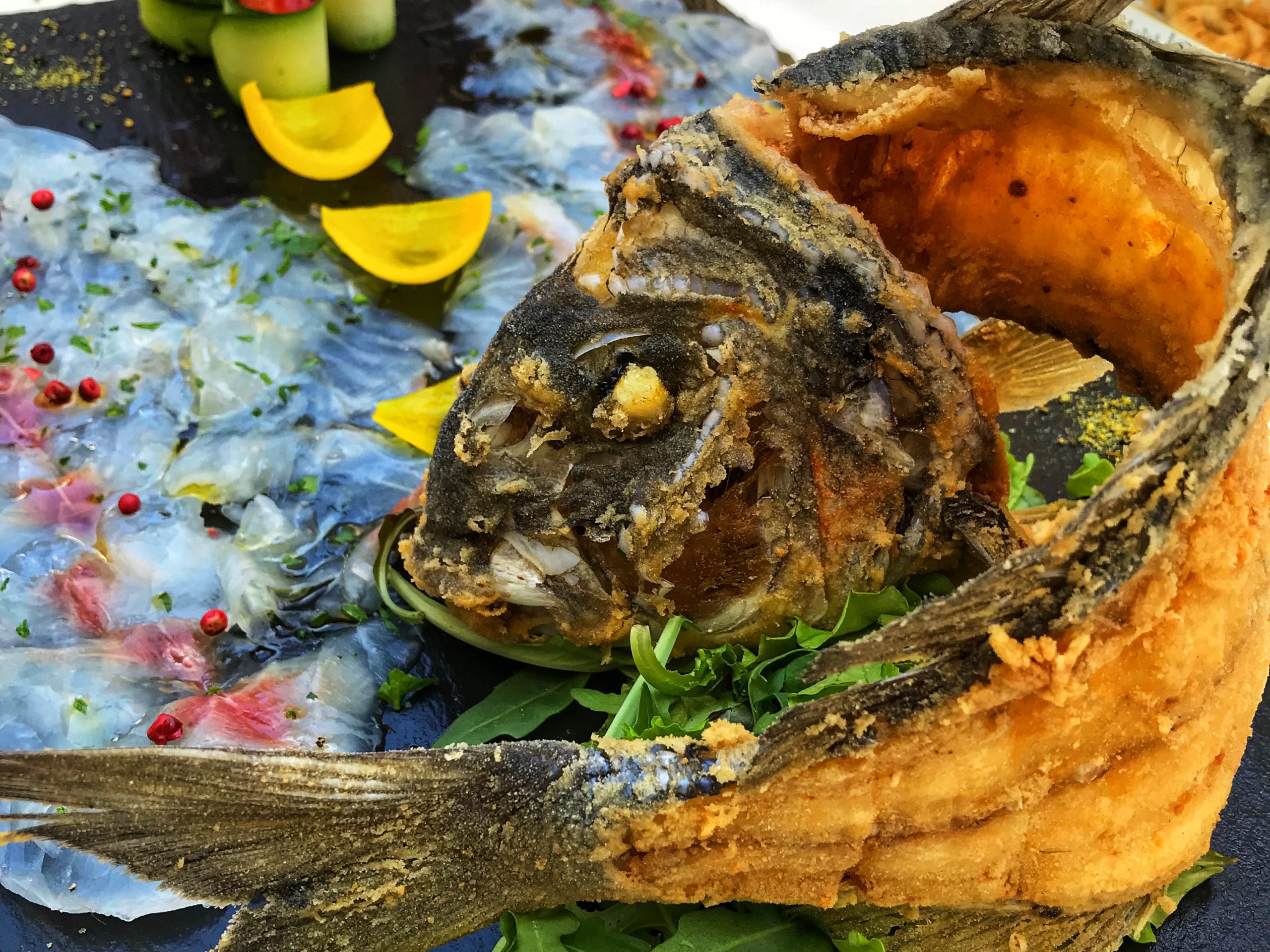
Like the Monopolitan menu of “mareterra”, celebrating a tradition of sea (mare) and land (terra), the old town of today’s Monopoli is a mix of traditional taverns and trendy bars that attract young people during the long summer evenings.
Monopoli best bar and restaurant guide Puglia guide The Big Gay Podcast from Puglia traditional food Monopoli, Puglia

Getting to Monopoli

If you are looking for a seaside base to explore the Valle d’Itria from Monopoli is well positioned, and easily accessible by public transport.

Trains run regularly between Bari and Brindisi and onward to Lecce. It’s a short hop by commuter train to near neighbour Polignano a Mare although accommodation and eating out tends to be cheaper here.

By Train:
Monopoli is well connected by regional trains along the Adriatic coast. It lies on the Bari–Brindisi–Lecce line, with frequent Trenitalia services from: Bari Centrale (~30 minutes), Polignano a Mare (~5 minutes), Brindisi (~45 minutes), Lecce (~1 hour 10 minutes).

From Monopoli station, it’s a 15-minute walk into the old town and seafront. Trains are reliable and scenic, hugging the coastline for much of the journey.

By Car:
Easily reached via the SS16 coastal highway, Monopoli is about: 45 km south of Bari (~45 mins), 40 km north of Ostuni (~40 mins), 20 km from Alberobello (~30 mins).

Park outside the old town—Piazza Vittorio Emanuele II and the harbour car park are good options. Look for white lines (free), blue lines (pay), and avoid yellow (reserved). During la pausa (early afternoon), some parking may be free. Remember to keep a photo of your hire car registration/license plates - some parking machines need you to input this.

More | our guide to driving in Puglia | using public transport.
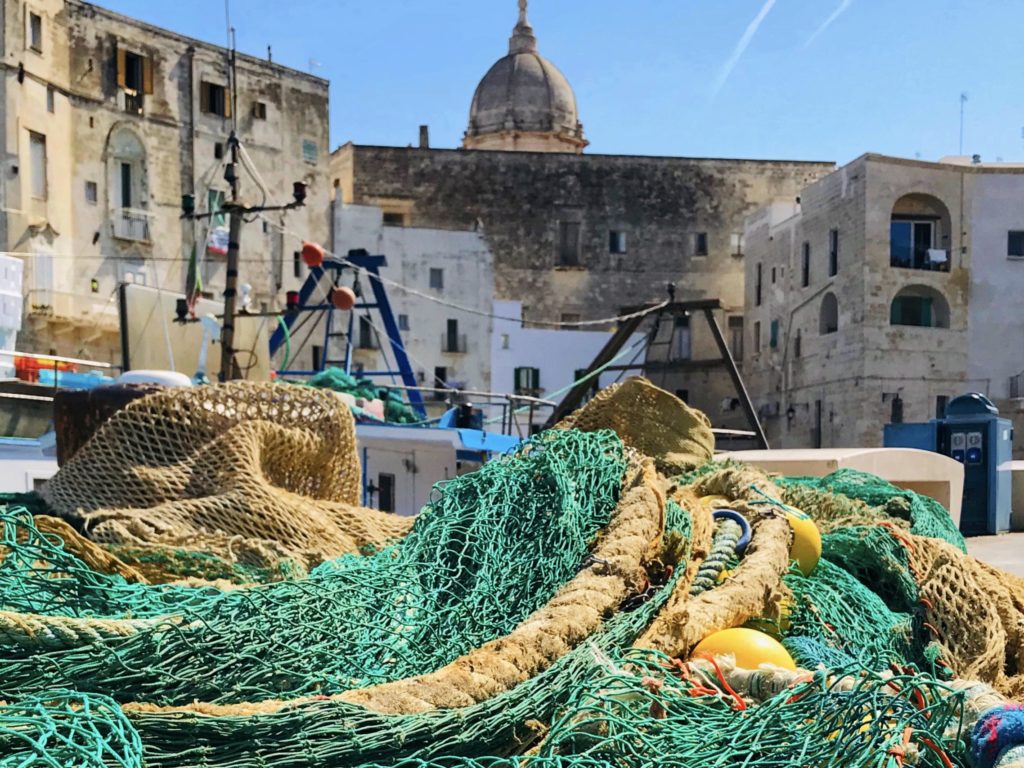
Fishing nets drying at Monopoli old port, Monopoli guide Puglia guide The Big Gay Podcast from Puglia Monopoli, Puglia
Monopoli guide Puglia guide The Big Gay Podcast from Puglia Monopoli, Puglia
Fishing nets drying at Monopoli old port, Monopoli guide Puglia guide The Big Gay Podcast from Puglia Monopoli, Puglia

Six Favourite Places to Eat in Monopoli

1. Il Guazzetto

Via Dell'Erba, 39 – Monopoli
🔗 ilguazzettomonopoli.com

Located in the heart of Monopoli’s historic centre, Il Guazzetto is a young and creative osteria that is warm and welcoming, with cheerful and knowledgeable staff. Great for fresh fish, prepared with flair and respect for local traditions.

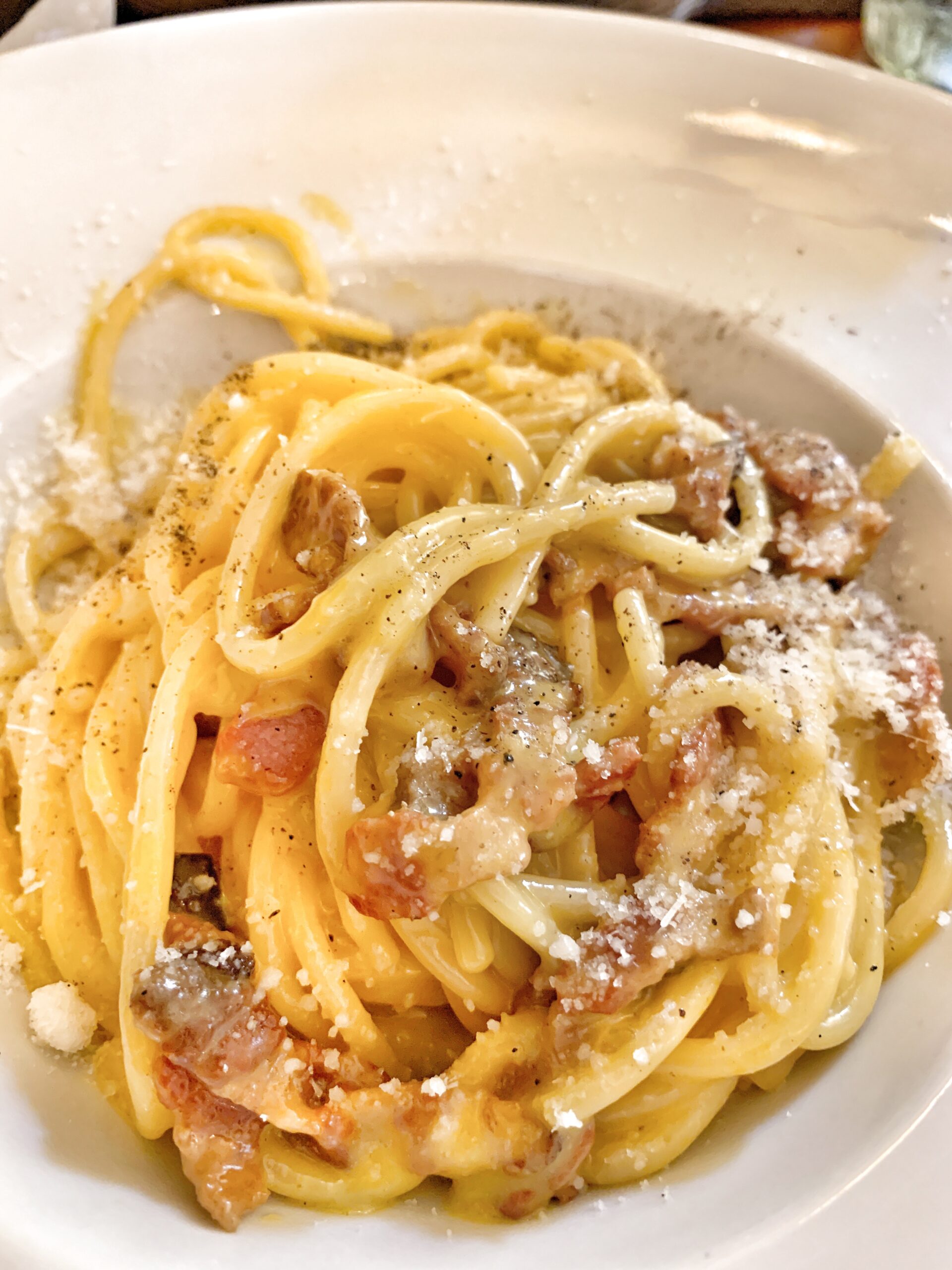
Their signature antipasto, named after the restaurant, and the frittino di  calamaretti (fried baby squid) make an excellent start. Follow with house-made tagliolini m'bè Cecc or the superb gran risotto viet accè u prov (regional dialect for a rich seafood risotto worth the trip alone). For mains, the mixed seafood grill or the zuppe Il Guazzetto are highlights.

Best for: Seafood with a creative, contemporary Puglian flair.

Monopoli old town, Monopoli guide Puglia guide The Big Gay Podcast from Puglia Monopoli, Puglia
2. Il Punto Cardinale – Trattoria Al Borgo

Via Cimino, 37 – Monopoli
🔗 facebook.com/ilpuntocardinalemonopoli

Overlooking the central Piazza Vittorio Emanuele II, this intimate osteria run by Sergio Cardinale and his partner Antonella is a warm space that feels rustic and refined. The two cosy dining rooms are simply decorated.

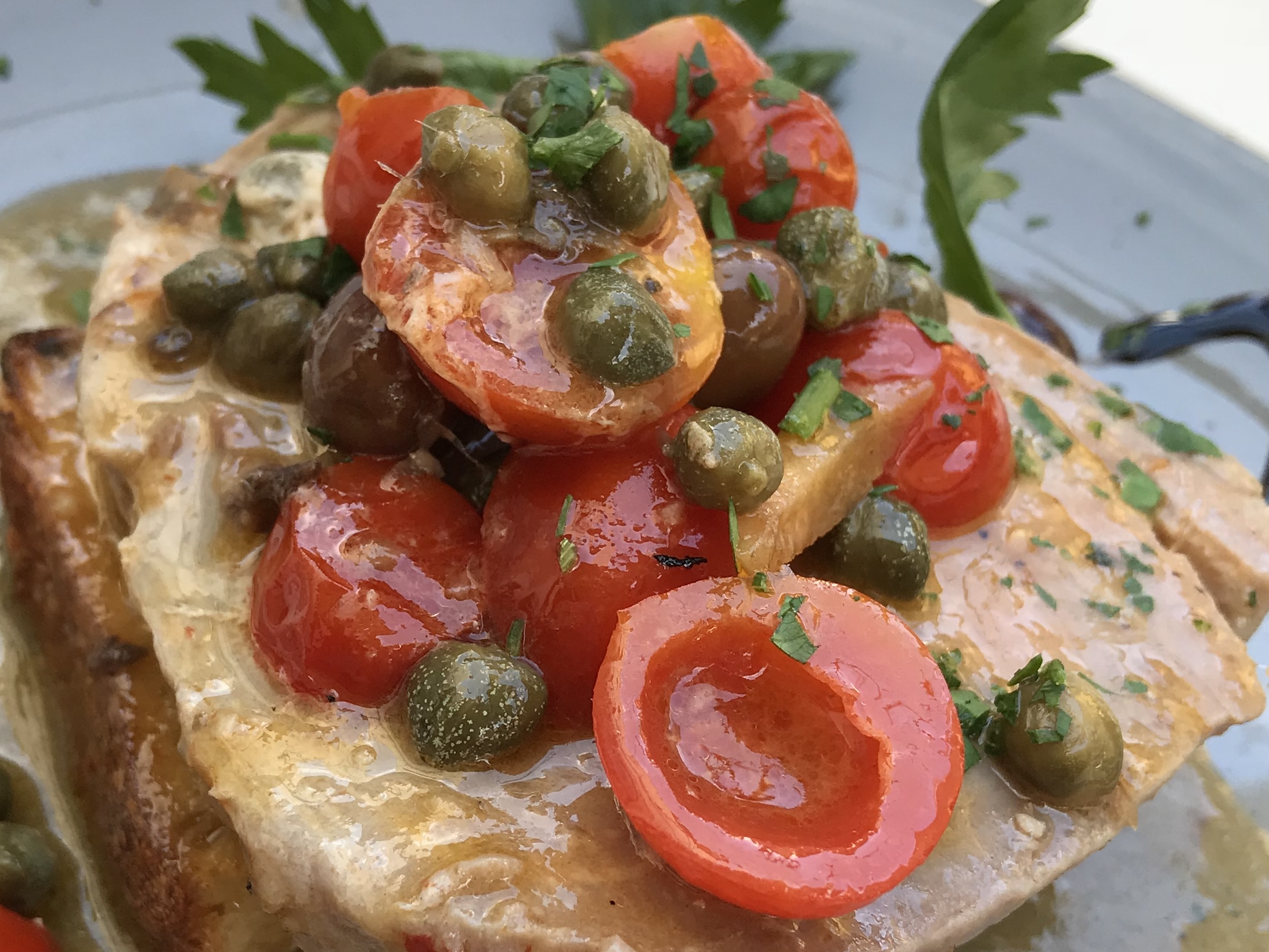
The kitchen prepares Puglian and Neapolitan traditional dishes with local, seasonal ingredients. The double-cooked artichokes and pasta mista with fava bean cream are top of our list. Other favourites include: mezzi paccheri al ragù di melanzane (aubergine ragù), tubettoni alla luciana (pasta with seafood), coniglio in porchetta (fragrant, herb-packed rabbit roast), bombette pugliesi (grilled pork rolls) baccalà in guazzetto, (salt cod gently stewed in a Mediterranean tomato broth with olive oil, herbs, olives and capers).

Best for: An authentic, down-to-earth meal with a twist—ideal for food lovers seeking soulful cooking in a less formal setting.


3. Osteria Perricci

Largo Portavecchia, 12
A long-standing, family-run osteria loved by locals and tourists alike for its fresh, simply prepared seafood. Serving hearty plates of mussels, grilled fish, and seafood pasta in a laid-back, authentic setting.
Best for: Traditional Monopolitano seafood dishes
🔗 facebook.com/OsteriaPerricci


4. La Locanda sul Porto

Largo Castello, 10
Overlooking the picturesque harbour, this atmospheric spot combines classic seafood dishes with local pastas. Try their spaghetti ai frutti di mare or the grilled catch of the day
Best for: Romantic seaside dining
🔗 facebook.com/lalocandasulporto


5. Vini e Panini

Via Garibaldi, 29
A casual eatery in the old town perfect for lunch or aperitivo. They serve gourmet panini, Puglian cheeses, cured meats, and a superb selection of local wines. Friendly service and outdoor seating make it a relaxing choice.
Best for: Laid-back bites with great wine
🔗 Instagram: @viniepanini

Cactus in Puglia with fichi d’India fruit
6. Lido Bianco

Via Procaccia, 32
Elegant and modern, with full-length glass windows facing the sea. The menu features high-end seafood and Mediterranean cuisine, with refined plating and attentive service. A perfect spot for a long lunch or special dinner.
Best for: Stylish dining with sea views
🔗 ristorantelidobianco.com


Five Favourite Things to Do in Monopoli

When we visit Lecce we feel the need to absorb the beautiful baroque architecture. In Bari Vecchia we feel the need to experience barese life, see the nonne make orecchiette and eat the street food. In Alberobello we navigate the crowds of the rioni Monte trulli zone. Even in Polignano there are sights to be seen and restaurants to be visited.

But Monopoli, with its compact centro storico and equally compact beaches, is where we visit to take a pause and reset.

1.  Piazza Giuseppe Garibaldi

For a caffè, aperitivo, lunch or dinner. Piazza Garibaldi might be a squeeze, but it is the perfect place to sit and watch life pass by. Restaurants close after the lunch service so be sure to arrive before 2pm (2.30pm at the absolute latest). Golden hour is when the piazza really comes to life.

2.   Porto Antico

Still a working port at the heart of Monopoli. Here local fishermen sell their day’s catch and mend their nets. There is something hypnotic about watching the small wooden boats bob with the rhythm of the sea. Sit a while and let the hues of blue and green, of fishing boats and sea, wash over you.
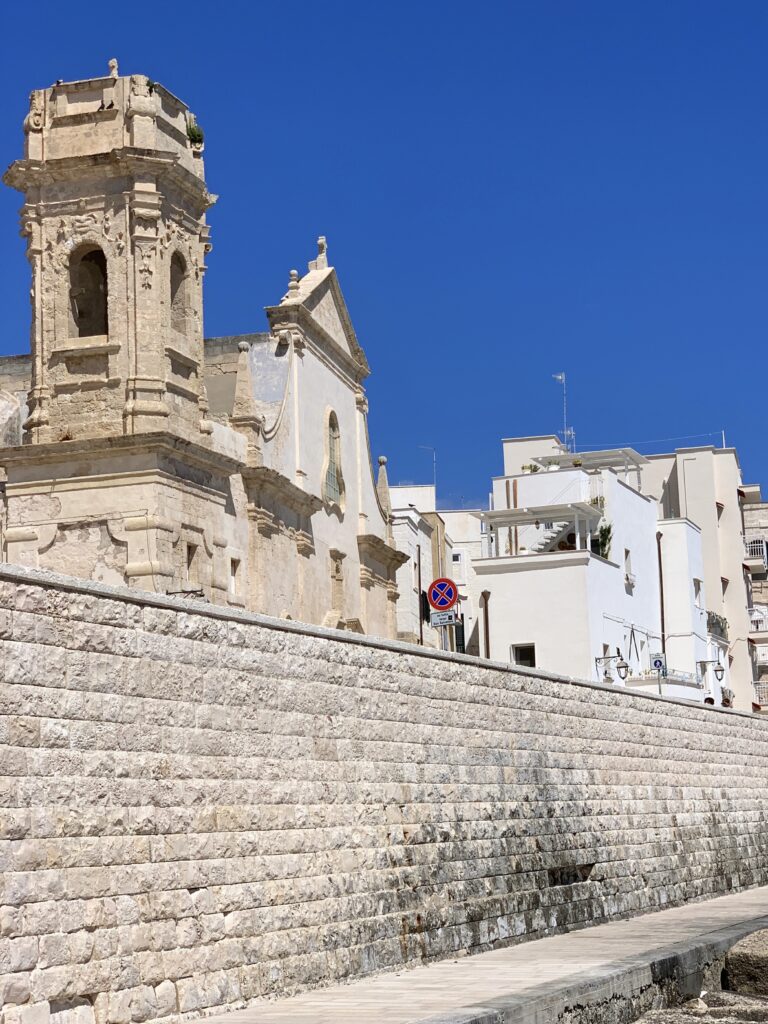
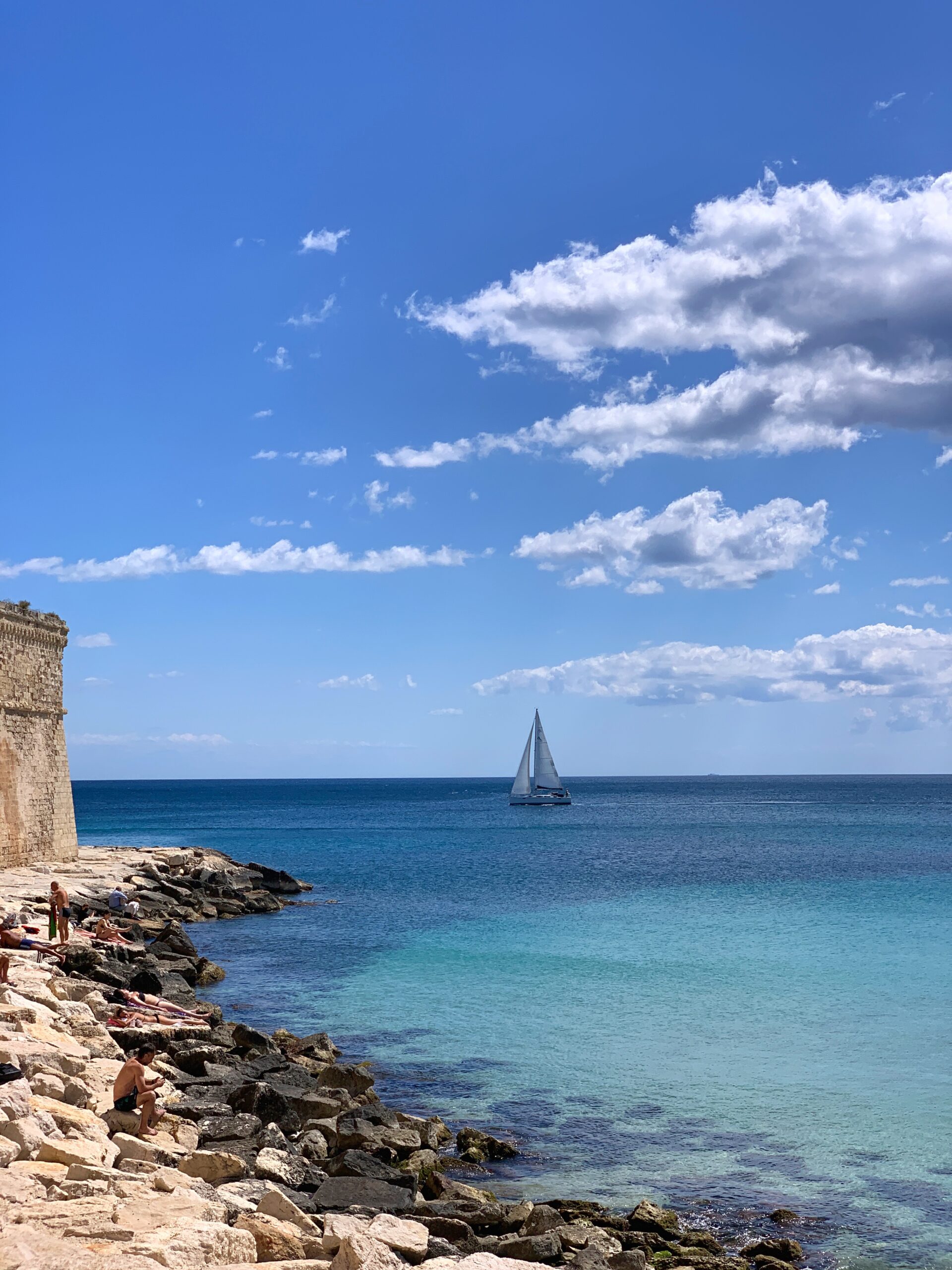
Monopoli old town, Monopoli guide Puglia guide The Big Gay Podcast from Puglia Monopoli, Puglia
3.   Stroll along the lungomare

Monopoli has a wonderful lungomare along the defensive sea wall that wraps around the old town. Follow it round from the Cala Porta Vecchia round to the Castello di Carlo V the 16th century sea fort currently used as an exhibition space.

Look out for the Bastione Santa Maria defensive tower with its two cannons pointing out to sea.

4.   Head to the beach

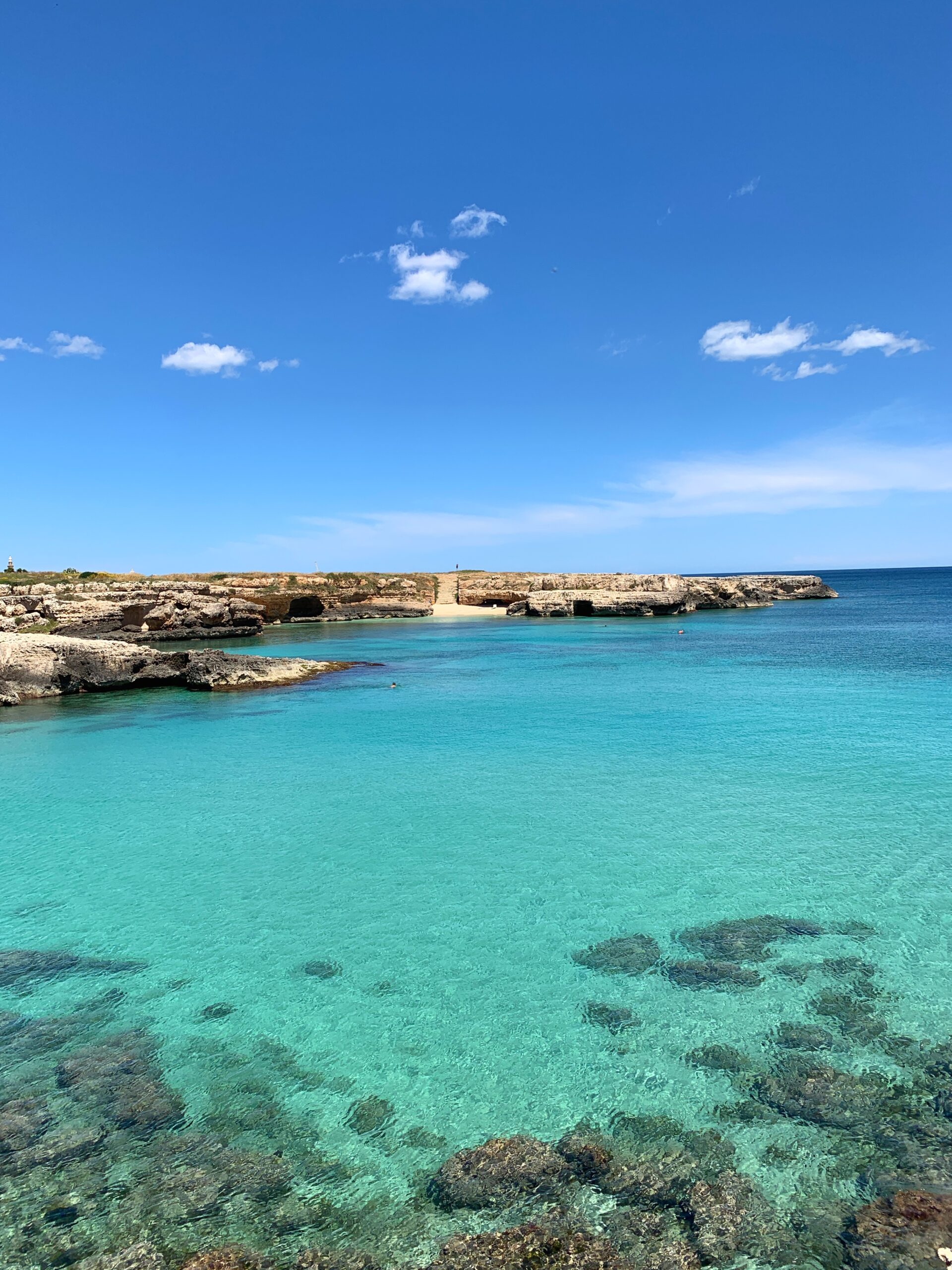
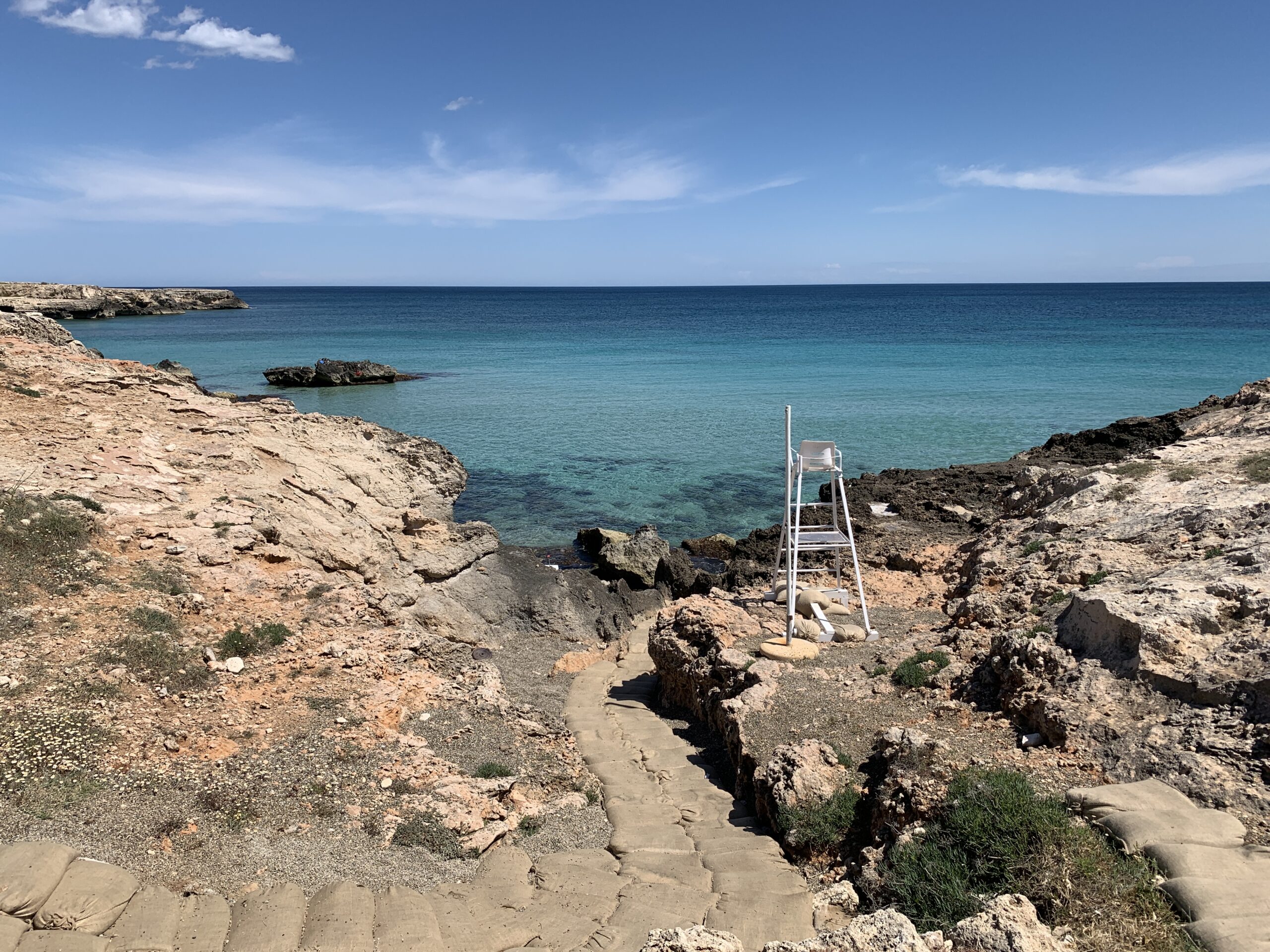
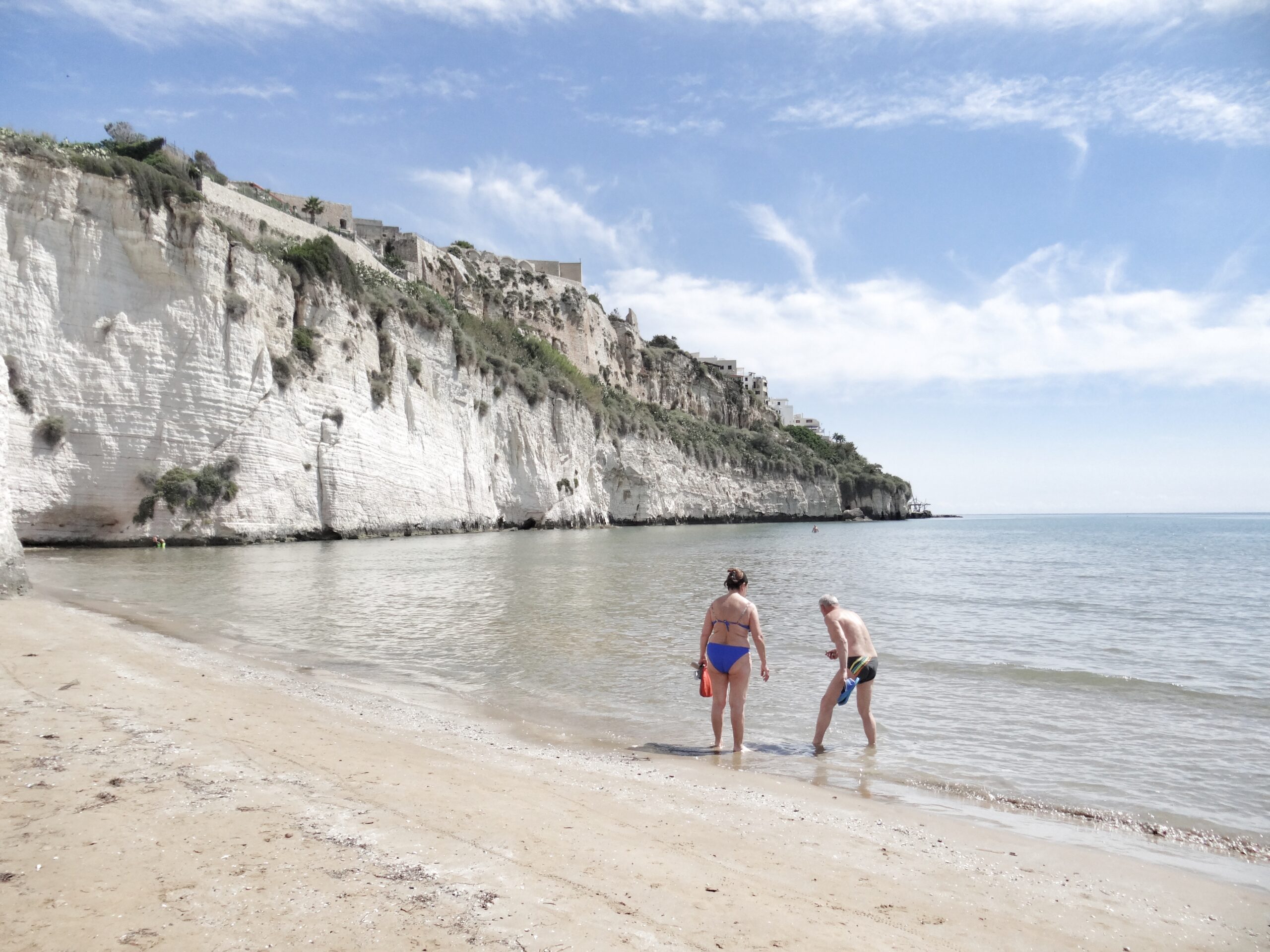
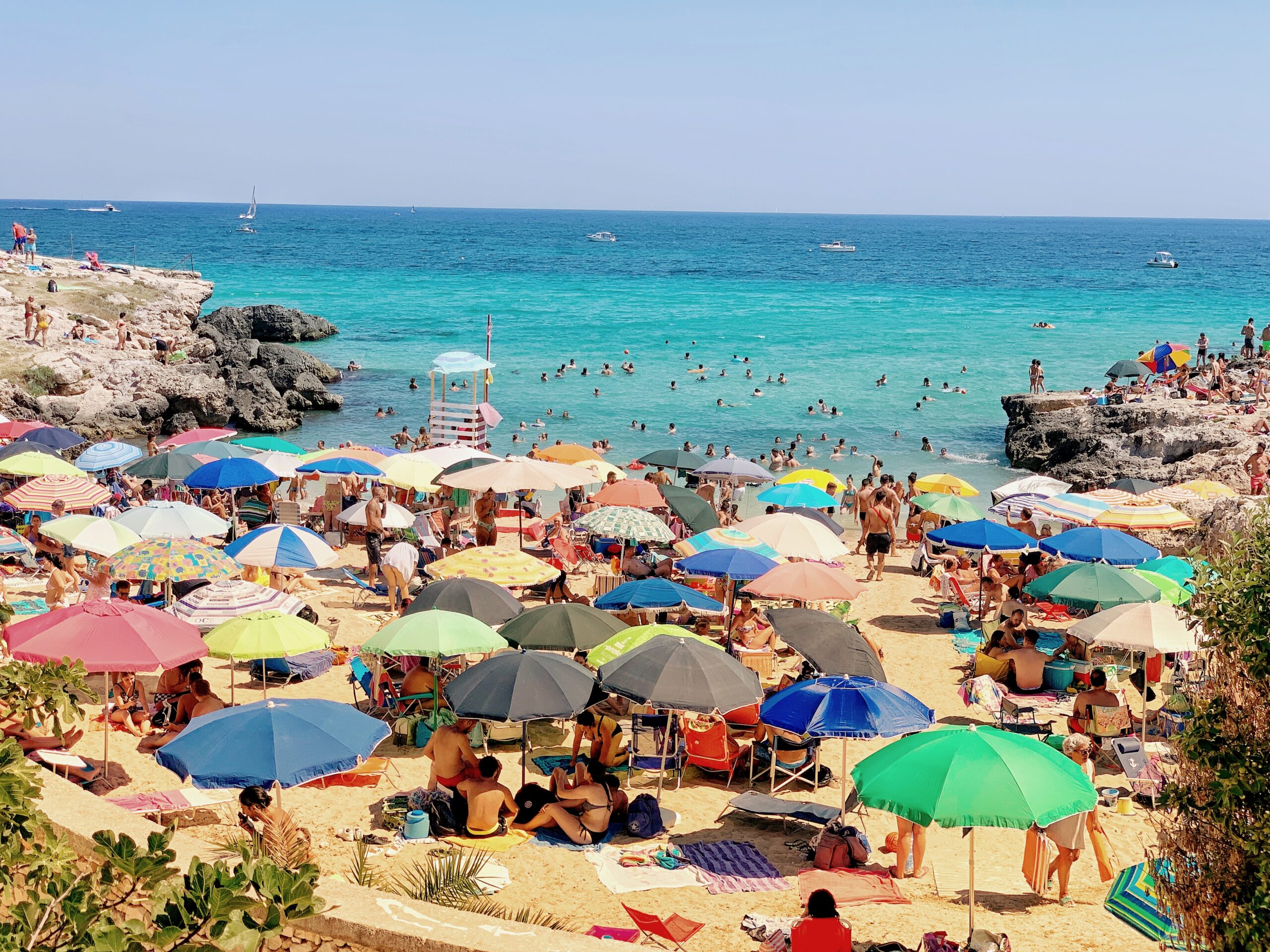
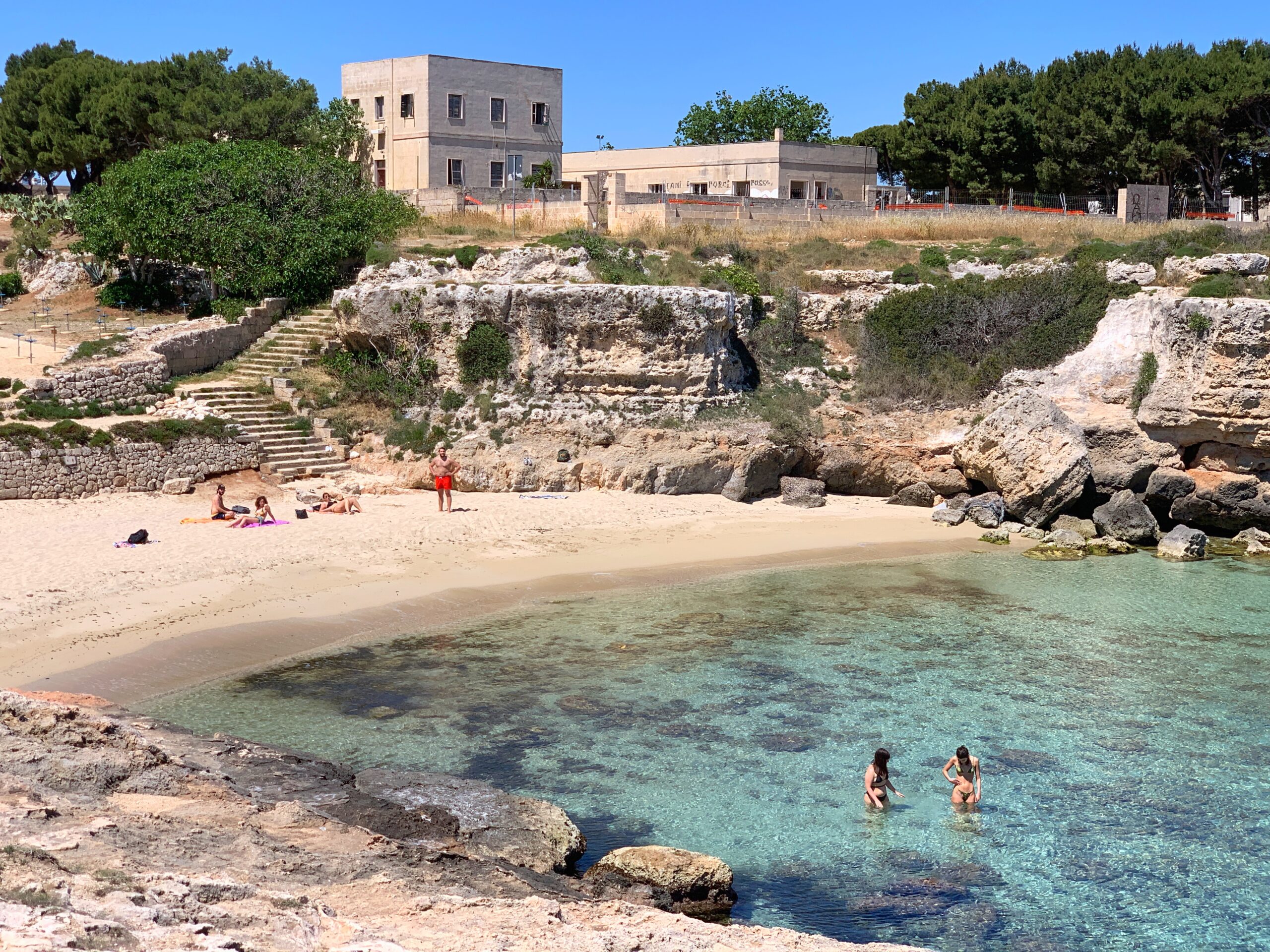
We sometimes refer to Monopoli as Puglia’s seaside town. That may be a slight misnomer; it is not unique and despite a coastline approximately 14 km long, it has mainly rocky coves and shelves with some sandy spots dotted in between. The longest stretch of town beach can be found at Spiaggia Cala Porta Vecchia sitting below the old town. Alternatively head to Lido Colonia with a nice, though compact, sandy beach.

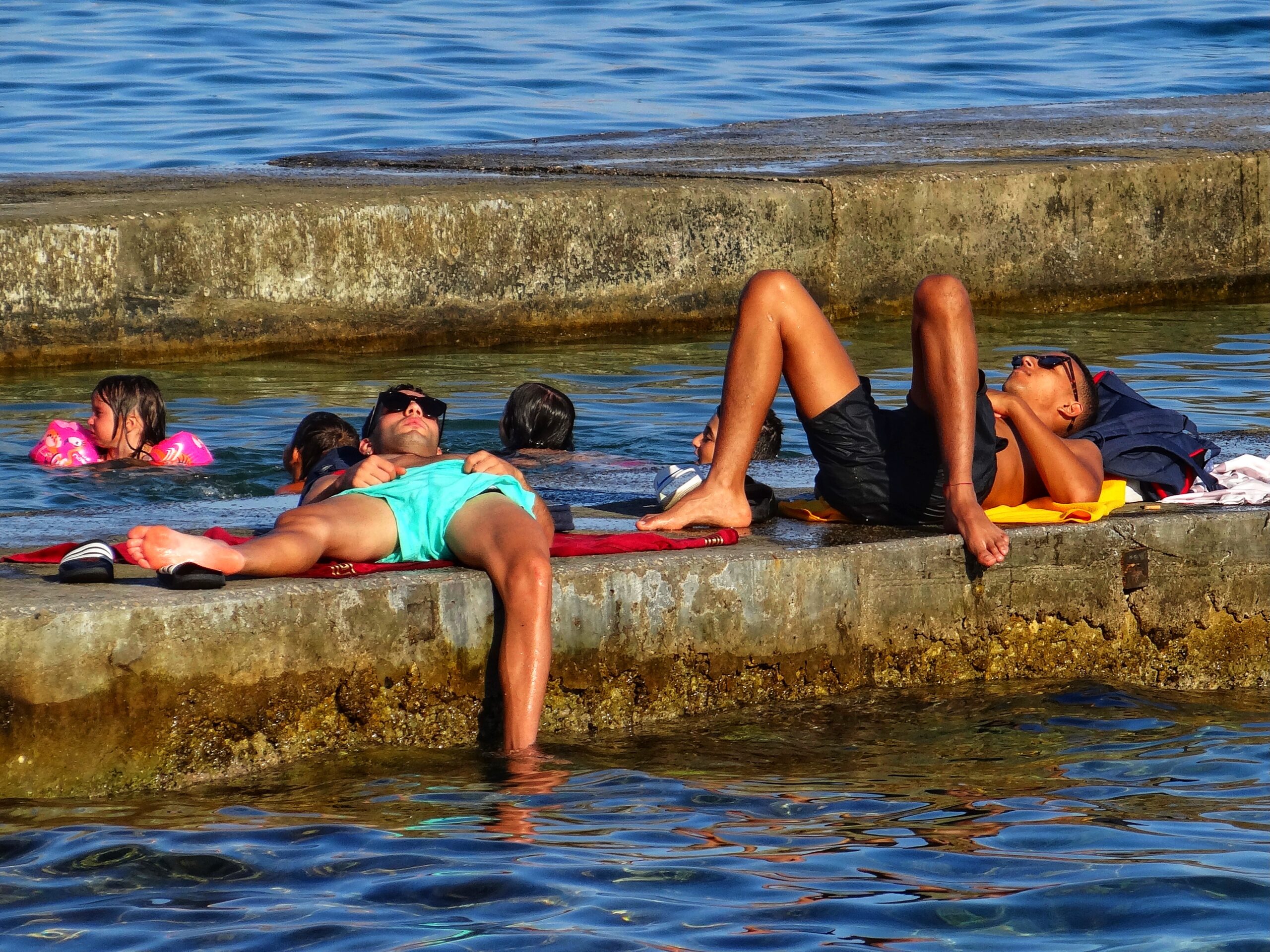
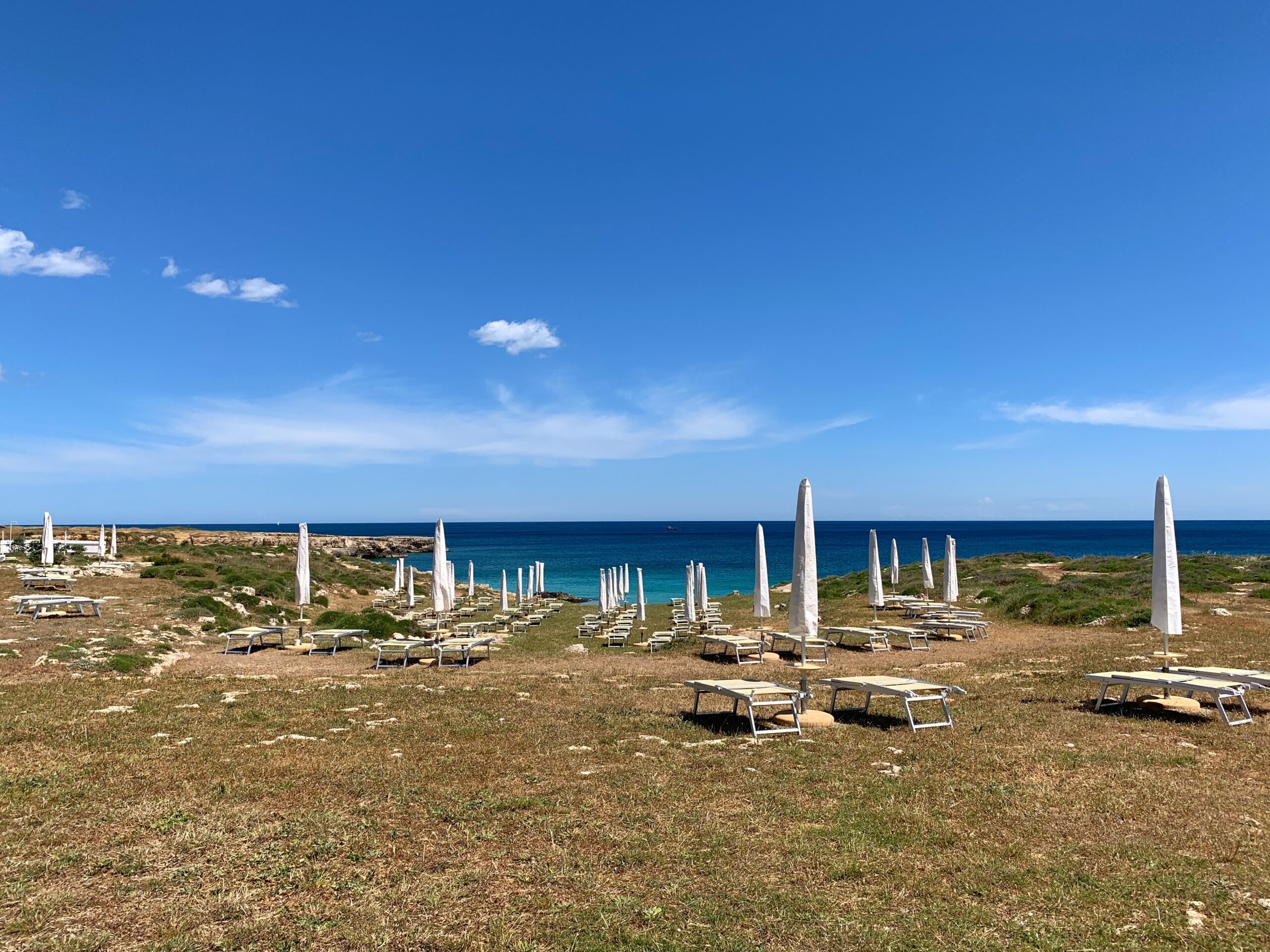
Over the last few years Puglia has become very, very popular - especially now that tourists from the USA have “discovered” our region - and many choose Monopoli for its “beaches”. That, on top of Italian visitors (Monopoli and near neighbour Polignano a Mare pull weekend visitors from Bari, the roads are choked) too many people vie for not much space, such that summer 2025’s news is the number of people arriving on the beach at 7am to secure the best spot. Some families have been reported arriving as early as 4am at Monopoli Capitolo. You have been warned!

Spiaggia Cala Porta Vecchia | A strip of sand that runs along from the foot of the defensive sea wall and continues around the rocks under the Bastione di Babula. Like most of Monopoli’s town “beaches” it is incredibly popular and fills very quickly. A small bar sits between the small car park and southern access.

Cala Porto Rosso | Enjoy the incredibly clear azure sea. This is a small sandy cove about a 10 minute walk from the old town. The beach section will be crowded, but spills over onto the surrounding rocks. The Red Beach Bar sits alongside for food and drink. This is a public beach with no facilities, other than found in nearby bars and restaurants.
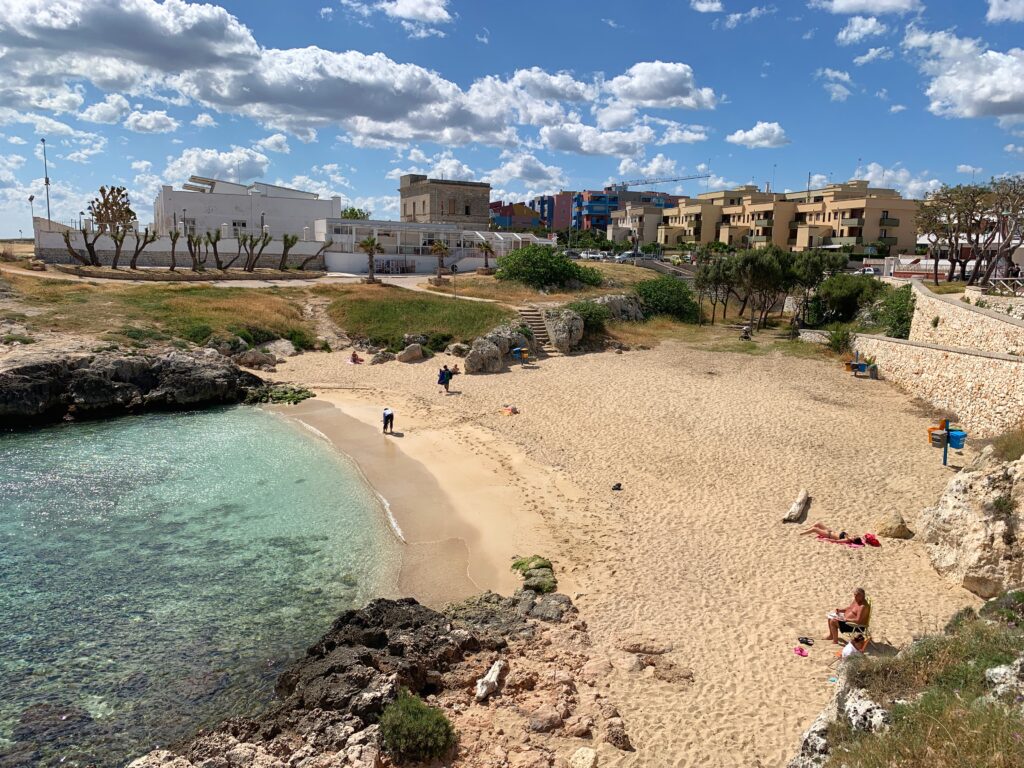
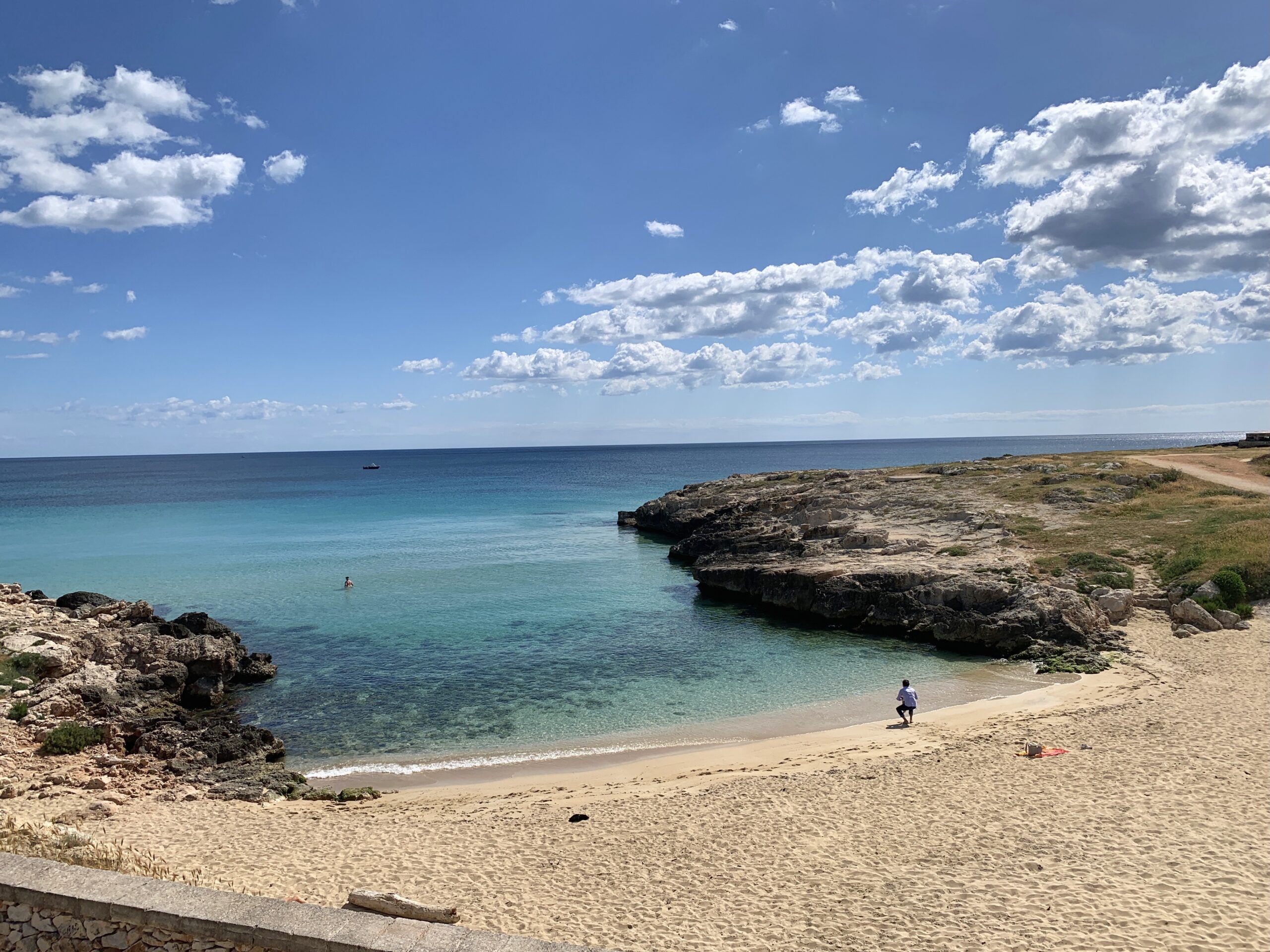
Best beach guide Monopoli, Puglia The Big Gay Podcast from Puglia
Beaches to the south

Spiaggia di Porto Verde | A tiny cove popular with locals.

Cala Paradiso | By spiaggia di Porto Verde but with a little more room. Part public beach, part beach club with some facilities during the peak season. It’s 2km from the old town - about a 20 minute walk.

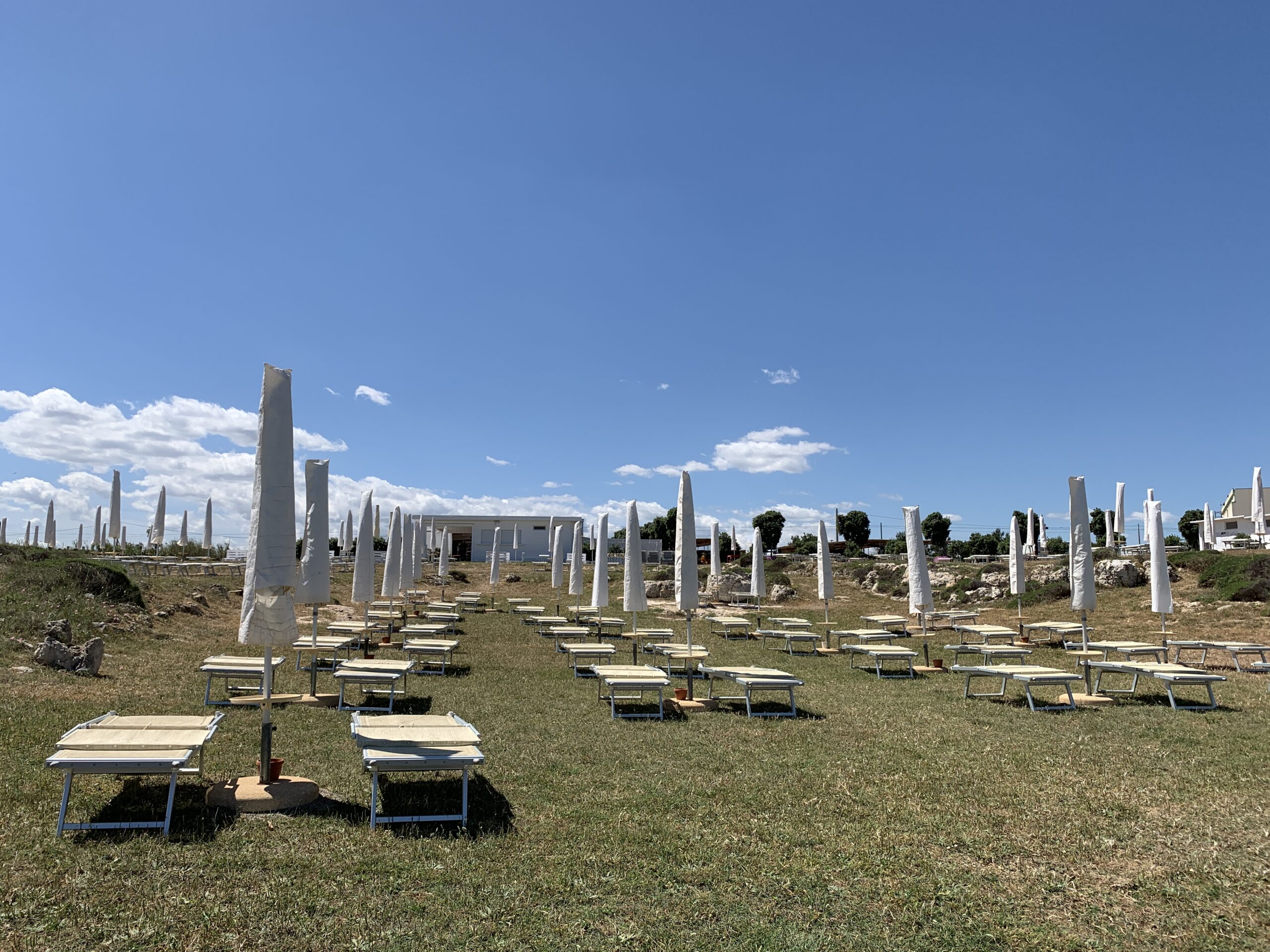
Lido Colonia | A small sandy beach adjacent to Calemarena, with bar and facilities. Parking on the road. 2.5km from the old town.

Calamarena | Parking runs along the road and its a short walk to the “beach” consisting of rocky shelves. During the main summer season loungers can be rented and there’s a small bar. 2.5km from the old town.

Spiaggia di Porto Marzano | 4km from the old town, with free car parking. A small sandy beach with a small bar serving drink and food during the main summer season.

Spiaggia di Porto Ghiacciolo | A lively sandy cove at the foot of an abbey, this isn’t a great choice for those who want a peaceful Monopoli beach experience, but is incredibly popular. Also has a nice bar/restaurant renting out sunbeds and parasols. Just under 4.5km from the old town.

Lido Santo Stefano | A bland and sterile enclosed lido with a sandy beach set in beautiful countryside and with picturesque views of the medieval Castello di Santo Stefano. 4.5km from the old town. Look out for the super cute cat colony as you pull into the parking area.

Capitolo | If you prefer long stretches of sand over small coves, Capitolo is the one for you. This is the first stretch of sandy beach south of Bari (continuing south to Savelletri and then Torre Canne, Specchiolla and Torre Guaceto). Located nearby Egnazi Archeological Park, it has a variety of beach clubs for all budgets as well as some smaller free sections of beach. 7km from the old town.
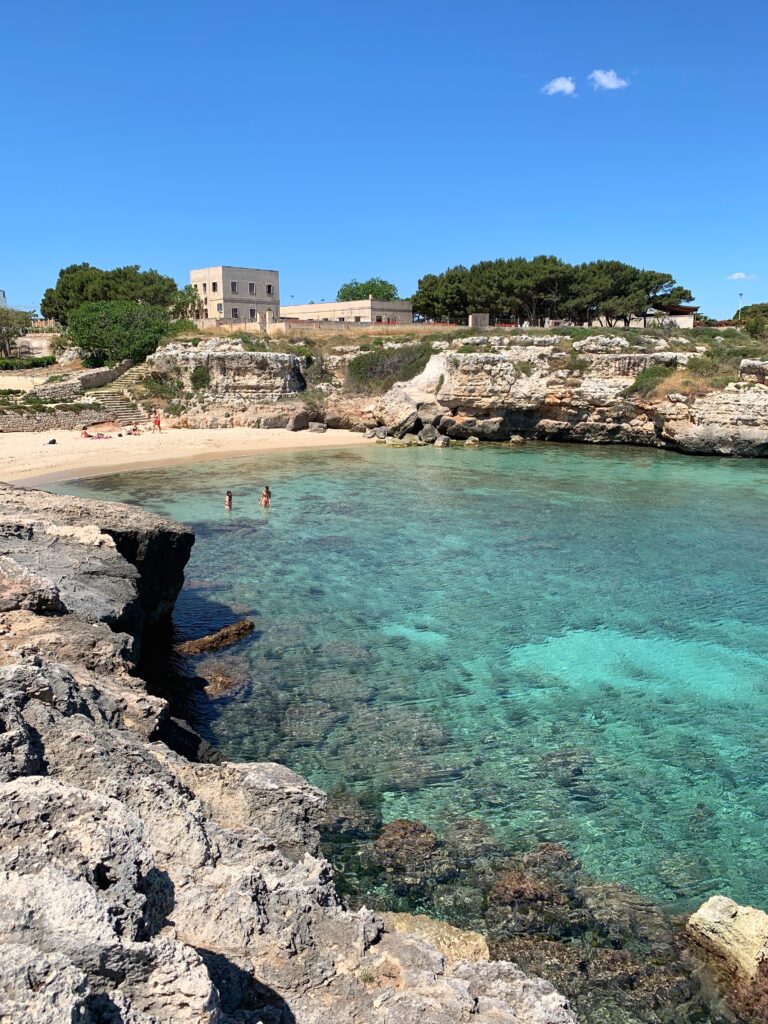
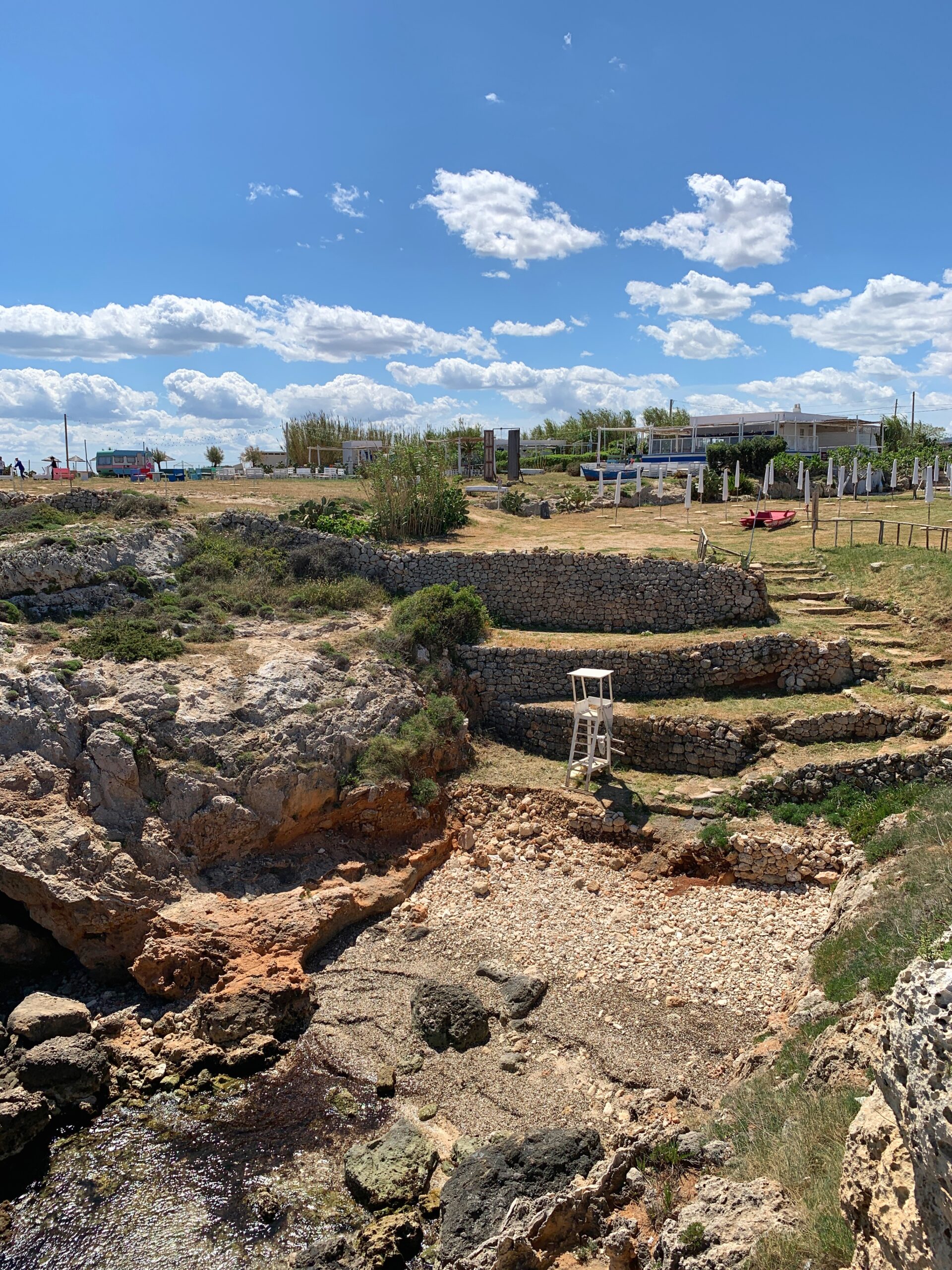
Best beach guide Monopoli, Puglia The Big Gay Podcast from Puglia
Beaches to the north

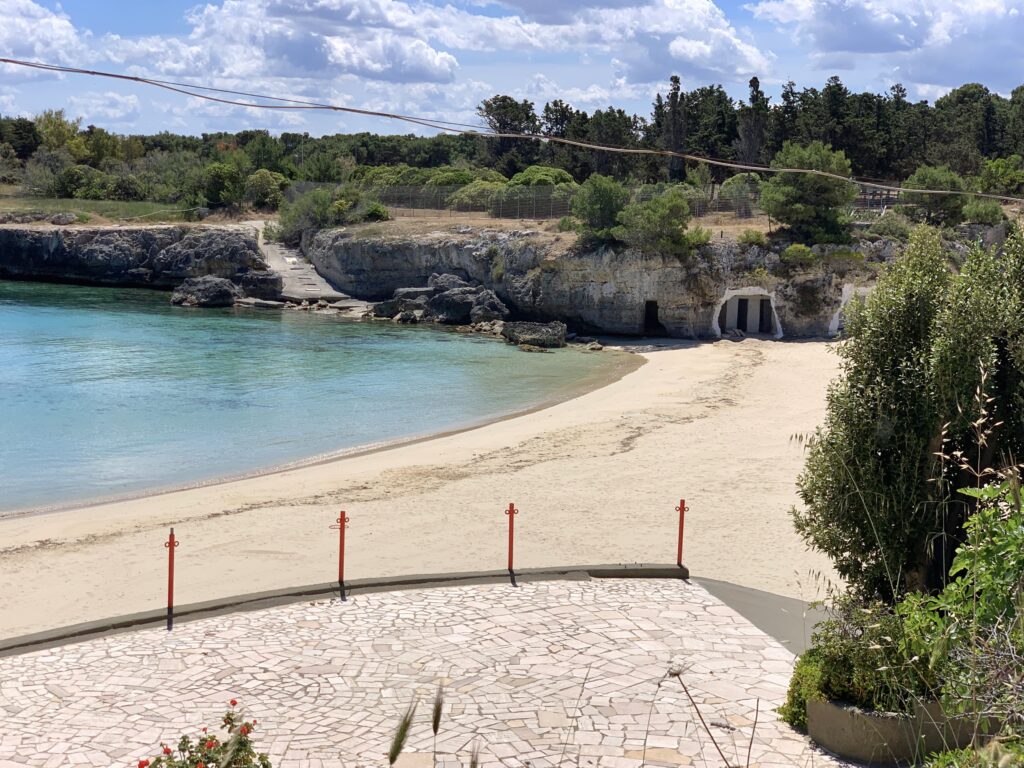
Torre Incina | Just over 5km from the old town Cala Incina is a very popular bathing spot. Like most of the nearby coast the beach is mainly rocky cove. Exit the SS16 at the Monopoli Nord exit, and drive towards the tower, where you can park. There is a gay and nudist beach a short walk from the tower in the direction of Polignano.

5.  Recharge

As we said, Monopoli is somewhere we go to pause and reset. So just choose any one of the above and enjoy the moment.
Chiese Storiche – A City of Churches

Monopoli is often referred to as the “city of churches”—over 20 in the historic centre alone. On our list worth visiting as you pass by:

Cattedrale Maria Santissima della Madia: Monopoli’s spiritual and architectural heart. Founded in the 12th century, the cathedral was rebuilt in Baroque style by 1772. It houses the revered icon of the Madonna della Madia, said to have miraculously arrived on a raft in 1117.

Chiesa di Santa Maria del Suffragio (del Purgatorio): This striking 17th-century church near the cathedral is known for its eerie display of mummified monks and noblemen. Founded by a confraternity that prayed for souls in purgatory, its interior is ornate and theatrical, with skulls and symbols of mortality adorning the facade.

Chiesa di San Domenico: A beautiful church on a raised piazza with sweeping steps, near the port. Its interiors are richly decorated with stucco and gilded altars.

Chiesa di Santa Maria Amalfitana: Legend says it was founded by Amalfitan sailors fleeing Saracen raids. It retains Romanesque features and is one of the oldest churches in town.

Chiesa di San Francesco d’Assisi: Rebuilt in Baroque style in the 1700s, it houses artworks and frescoes. Its asymmetrical facade overlooks a quiet square near the sea.

Cappella Santa Maria della Zaffara: Perched beside the sea walls, this small, round church served seafarers and remains a symbol of Monopoli’s maritime faith.

Chiesa di San Salvatore: Dating to the 12th century, this church’s simple, fortress-like exterior reflects its possible role as both place of worship and lookout post.

Best beach guide Monopoli, Puglia The Big Gay Podcast from Puglia


Death, Devotion, and Defence in Monopoli’s Historic Core

The Church of Santa Maria del Suffragio (Il Purgatorio)

Tucked along Via Argento in Monopoli’s historic centre, the Church of Santa Maria del Suffragio, more commonly known as Il Purgatorio, offers a compelling window into the city’s baroque religious culture and its enduring confrontation with death.

Built in the early 1700s, the church is most famous for its wooden-panelled portal, a powerful artistic statement known as the Trionfo della Morte (Triumph of Death). The door depicts a social pyramid upended by mortality itself: the upper panels display symbols of power, the lower ones the tools of labour. At the centre, two mirror-image skeletons challenge us to guess which one once wore a crown or cardinal’s hat, and which bore the burden of poverty—reminding all who enter that death is the great equaliser.

Inside, the church follows a Latin cross layout and features five altars, the main one a classical Baroque composition in Lecce stone. A side garden leads to a crypt, once used as a burial chamber for confraternity members and their families. Some skeletal remains from the 18th and 19th centuries are preserved in glass cases. The high altar is graced by a painting by Paolo De Matteis, a celebrated Neapolitan artist, depicting Our Lady of Mount Carmel.

A Church of the Standing Dead

Il Purgatorio is sometimes called the “Church of the Standing Dead” due to the eight mummified bodies displayed upright in niches—townsfolk and a lone foreigner who died between 1172 and 1832. These remains were once buried beneath the sacristy, but following burial bans in churches and the construction of the town cemetery in 1842, they were moved and are now the focus of devotions, especially in November, the month of the dead.

The Confraternity of Souls

Founded in 1668, the Confraternity of the Holy Souls in Purgatory (Anime Sante del Purgatorio) was born from a human need to confront and ritualise death. It was granted the same privileges as the prestigious Archconfraternity of Santa Maria del Suffragio in Rome, to which it was affiliated. The confraternity’s original meeting place was beneath the cathedral, but after the collapse of the cathedral bell tower in 1686, killing several people, the lay brotherhood received permission to build its own church—on the very site of the destroyed structure.

By the Holy Year of 1700, part of the new church was completed. On 2 April that year, the remains of deceased confratelli were transferred to the crypt, and the new site was blessed. Their emblem featured the Madonna with the Child Jesus and a kneeling woman in the confraternity's robes pouring water over souls in Purgatory—a vision of devotion, mercy, and intercession.

The green mozzetta (cape) worn by members symbolised spiritual equality. The confraternity wasn’t only concerned with prayers—it also ensured a dignified burial for poor members who lacked the means for a proper funeral. Its members organised food and oil collections, managed finances, and prioritised devotion to the Madonna, especially on the feasts of the Nativity of Mary and Our Lady of Sorrows, the latter honoured with a Good Friday procession through Monopoli’s old town.


The Castle of Monopoli

From Coastal Fortress to Royal Residence and Prison

To the north of Monopoli’s centro storico rises the city’s medieval stronghold: the Castle of Monopoli, dramatically perched on the promontory known as Punta Penna. Built to guard the Adriatic shoreline, the castle originally lay just outside the city’s limits, only later absorbed into the expanding town during the 12th and 13th centuries.

Its imposing pentagonal structure is fortified with corner towers and stretches across two main levels (and two intermediate ones). Constructed in squared limestone tuff, the walls are as striking as they are sturdy.

Military Might and Noble Heritage

The main entrance lies on the south-western façade, framed by a later-added cylindrical tower, once fitted with a drawbridge. Tuff-carved rosettes and arch motifs decorate its upper edges. Nearby, fragments of Monopoli’s original defensive walls are still visible. On the opposite side, 17th-century renovations added elegant details, reflecting the castle’s transformation from military fortress to noble residence.

The north-east façade, fully exposed to sea winds, is punctuated by a pentagonal bastion containing a loggia and defensive caditoie (machicolations). Beneath the loggia, a stone coat of arms is carved with the date 1552 and the name of Don Pedro de Toledo, the Spanish Viceroy responsible for much of the castle’s enhancement.

A Changing Role

In 1660, major reconstruction works altered the castle’s function and form, turning it into a baronial residence. Later, in the 19th century, it was repurposed as Monopoli’s district prison, a role it maintained until 1969.

Today, the castle preserves a number of historic treasures:

  • The rock church of San Nicola de Pinna, founded in the late 10th century by a Saxon nobleman;
  • A mysterious arched doorway with a vertical slot—possibly the oldest architectural element in the complex;
  • A sloped section of medieval defensive wall, tucked into a corner of the lower-level L-shaped hall;
  • A cistern chamber, carved into earlier stonework, offering a rare look at the town’s early infrastructure.

After years of neglect in the mid-20th century, the castle has undergone careful restoration and today stands as a symbol of Monopoli’s layered history: from seafaring republic to Spanish outpost, from religious devotion to civic resilience.


Monopoli by Festival

Festa della Madonna della Madia – Monopoli’s Maritime Miracle
Main feast day: 16 December (preceded by celebrations from 12 December)

In Monopoli, the sea delivers the Madonna not once, but three times — a miracle woven into the soul of the city. The Festa della Madonna della Madia, held every 16 December, is a deeply moving celebration that commemorates the legendary arrival of a sacred Byzantine icon, believed to have reached Monopoli by raft in the year 1117. According to tradition, this icon — depicting the Madonna and Child — was found aboard a wooden raft that appeared mysteriously in the harbour at night, providing not only spiritual inspiration but the very beams needed to complete the roof of the city’s unfinished cathedral.

The festival blends solemn devotion with theatrical spectacle. Events begin with a triduum of preparation from 12–14 December, featuring daily Mass and rosary prayer at the Basilica Cattedrale. On the 15th, the vigil of the feast includes further services in anticipation of the miracle’s anniversary.

The main celebration on 16 December begins in the early hours before dawn. A musical band procession super early (at 4:00 a.m.) winds through the city, followed by a moving prayer vigil at Cala Batteria, the site where the icon is believed to have come ashore. As dawn breaks, a replica of the raft — bearing a copy of the miraculous image — is guided into the old port by illuminated fishing boats, recreating the moment that has defined Monopoli's spiritual identity for over 900 years.

A solemn land procession after (at 5:30 a.m.) retraces the icon’s legendary path from the coast to the cathedral, followed by a commemorative early morning Mass (at 8:30 a.m.) Further services and celebrations take place throughout the day, culminating in an evening concert and fireworks display.

With its fusion of maritime devotion, historical remembrance, and heartfelt community participation, the Festa della Madonna della Madia stands as Monopoli’s most powerful expression of faith — a living tradition that connects past and present in one of Puglia’s most evocative coastal settings.


Nearby

Valle d’Itria | drive the back roads

According to our northern Italian based ex-London friends Greg and Andrea who spent a joyous 3 weeks travelling up and down and around Puglia, forget “totally unauthentic” Alberobello, which is “worth giving a miss.”

“Trulli are its focal point but they are all over the countryside. Grit your teeth and don’t go!” Greg exclaims.

“If you are looking for UNESCO and World Heritage, if you are looking for authenticity then seek out the back roads between Savelletri, Fasano and Cisternino,” urges Andrea.

A viewpoint echoed by Greg.

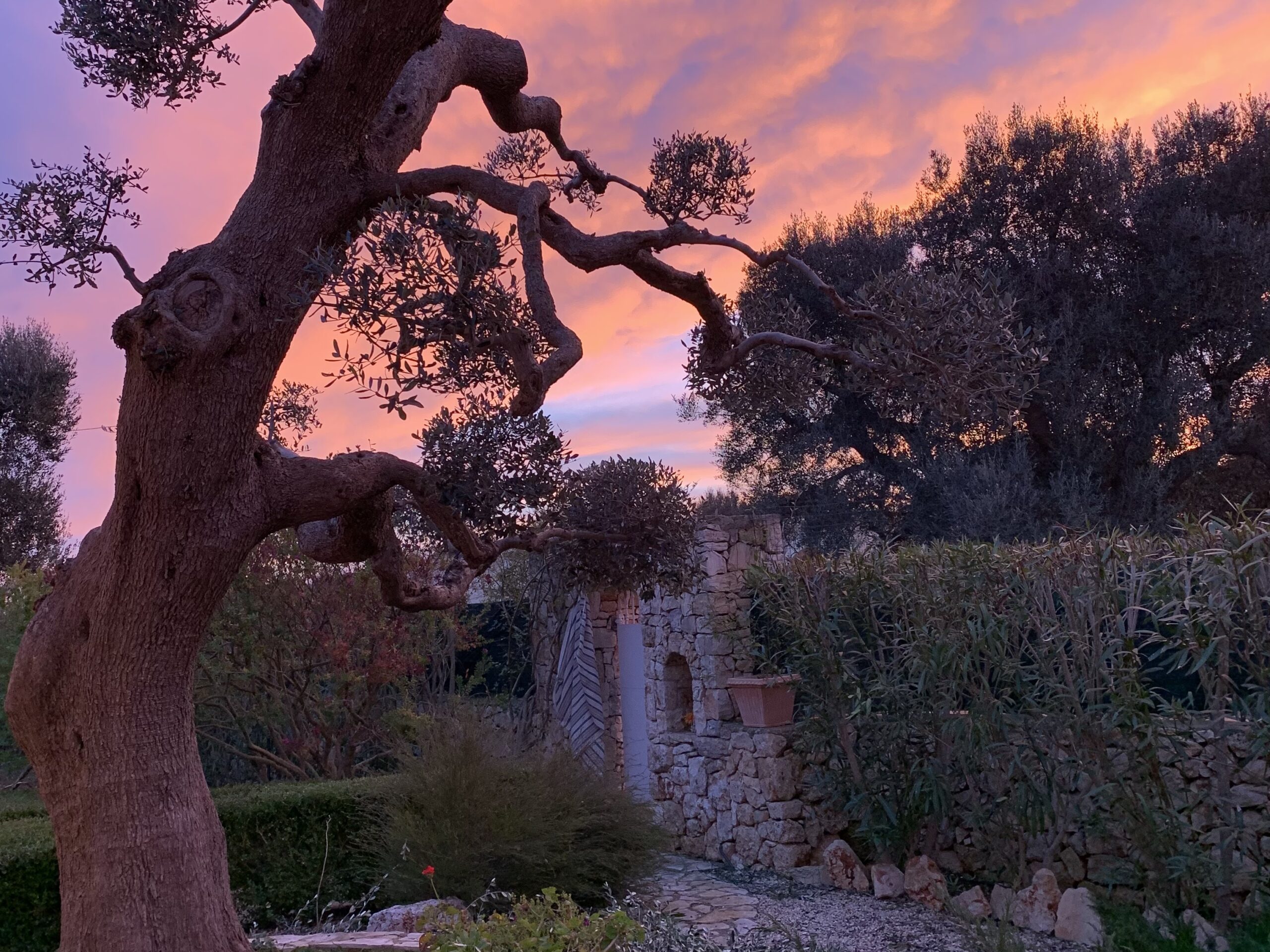
“Drive the back roads inland between Torre Canne and Savelletri - the UNESCO protected dry walls, with the millennial olives groves. Fantastic drives, walks, bike routes - simply stunning. Breathtaking.”


For more information

Monopoli tourism website

The city of Monopoli tourism association have a fantastic website that has recently relaunched. Full of useful information, including Events and News sections. The website is in Italian and English.

More | Discover Monopoli - Monopoli Tourism official website (in English)
  • Getting Here

  • Visas and Embassies

  • Weather

  • Currency

  • Useful Information